

#15


INTRODUCTION
This edition is a bit special — a little cinematic bridge between twin cities. Drawing a dreamy parallel between Mumbai and Muscat, Vanij and Hassan, this month’s guest contributor, both pen love letters to the cinemas that house personal and collective histories, and thereby, to the cities they love so well. Prakhar winds back to the 80s, surveying the politics of representation in the early works of Mira Nair, the then-evolving student documentarist. Finally, back with a classic review is Varun, post a most enjoyable screening of Weapons [2025].
1. Lessons in Collective Dreaming
VANIJ CHOKSI
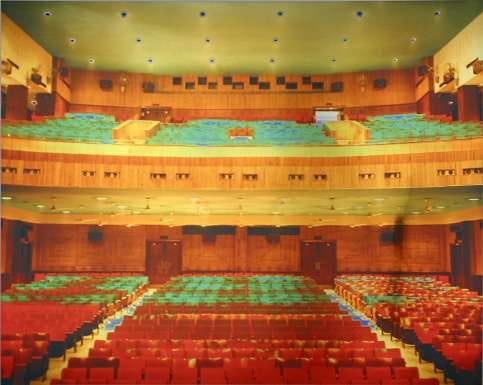
Now that Bombay has been gifted a space for weekly free screenings at Regal Cinema, I’ve been thinking about the physical act of bringing oneself to watch a film. Something that's completely apart from the film itself. I’ve been thinking about the pre-screening rehearsed performance that most Regal-goers have adopted as ritual – a hive-minded production of gestural conduct, the embryonic genesis of a tradition, an overdue communal trait slowly lodging itself as a fundamental attribute of the city's identity. Regal’s legacy has transformed into an interstitial capital of cinema, where, like the shifting shades of light and shadow on its single screen, every Thursday, the closeted cinephilia of Bombay punctuates a week of blockbuster programming. Over the many screenings I have attended here, I’ve stood at different points in the winding queue that often folds back onto itself, but I have always managed to find a seat, as does everyone else – the space functioning like a reverse clown-car where the expanse of the interior brutally belies what the building's facade suggests. Inside, greeted by the dull, hallucinatory burning of amber boxes christened Exit in cherry red and a moment of light before the pre-screening curtain calls of exaltations and acknowledgements, I find that I am at once separated from the rest of the queue as well as joined in an act of temporal experiences dissolving seamlessly into unity. And once we emerge back into light, pledging allegiance to the signs that first welcomed us as a meandering prestige to our clown-car act, I realise that it’s not that I may never see these people again, it’s the characteristic incognito that the cinema shelters that I perhaps never saw most to begin with. Have I watched different films with the same stranger? At Regal, a haven of recurring missed encounters, I know that that’s true. Though we don’t know each other as more than an occupied seat, I count on you to reside somewhere out there in the dark long after I’ve lost sight of you.
I find myself writing mostly about cinema and not my experiences watching it. Perhaps, private laptop screenings don’t make for sensational experiences or writing. For most of my film-watching life, I find my brain housed inside the camera, ironically looking from a point of view once removed from the life captured by it – like an analyst taking cues from structures, arrangements and patterns. This past month at Regal, I watched three films by Hitchcock and one by Coppola, and, at the risk of sounding heretic, I was more intrigued by the sight of them on a big screen than the films themselves. The images carried an unusual weight, a new irony embossed on it, sent by the immense concentration of an audience as if discovering it for the first time. There was humour in images I would not have recognised alone, reactions underscoring the most nondescript scenes; reverberating from a spectatorial epicentre, shockwaves of influence. Oftentimes, leaving the screen behind for a moment, I looked nostalgically over the people watching the film, the silver light silhouetting their heads, making an equally cinematic substitute for my eyes. I was immediately reminded of a quote from Richard Ayoade’s editing room crash-out in The Souvenir Part II, ‘We should put little cutouts of the audience in front of the monitor…to remind [us] that it's cinema and not something you watch mid-week with your uncle!’
Given the dim separation from one another that is characteristic of the cinema, it is easy to forget that the auditorium is not a suspended vestibule, a vacuum of time. Our preoccupation with the life observed by the film is in itself an acknowledgement of the will that is exerted in observing it. There are learnings you can have that are completely apart from the learnings derived from the meaning of a film. The act of living within the present is entwined with the act of looking, something that is at once the formal hinge upon which cinema operates and is unmistakably inherent in how cinema is received. But this also sheathes a dead-end, for the idea of merely looking could potentially render cinema two-dimensional, as if you are wiped of its memory once you leave the space. The reciprocation of cinema demands more tactility, not only from those who look at it, but also at those who do the looking and from where they look. Does a dying star make a sound if there is no one around to hear it? The auditorium itself then becomes a living entity, interacting with and physically touching its inhabitants, as real as the film is, the true three-dimensional element of cinema, seeding it with reality.
This idea for me isn’t reserved only for the cinema space. I walk around Bombay’s Fort area daily, modelled perfectly in the verbose style of the city’s colonial history. The Edwardian keystones of many commercial buildings form a breadcrumb trail leading to the past, announcing the grandeur of its Gothic Revival neighbours at the intersection of Victoria Terminus and the BMC Building. And there at the corner, in front of the stoop of Aram Vada Pav, I have my afternoon-ly audience with Lady Progress. On one such afternoon earlier this year, rapt in her sophisticated marble form, the phrase came to me, ‘Experiential amnesia… no, postponing the experiential amnesia.’ By the time I walked back to work, I had a theory: We don’t live in the present; rather, the microsecond. Every action you do exists within the microsecond in which it is done. It is then pushed into the annals of your history. That is the essential impermanence of existence that we often overlook. Something as simple as cracking your knuckles, which lasts merely a second, would never exist in that manner, at that time, in that specific place ever again – its intrinsic value exists within the microsecond in which it is done. Living in the moment, staring at Victoria Terminus in this case, for an extended period, implies that although each passing microsecond that you push behind you isn’t exactly replicated by each microsecond arriving in your direction, it maintains some form of similarity such that it prolongs the experiential amnesia of the microsecond and postpones, as a whole, the history that you create. The essential impermanence is sustained for a period, drawing attention to our ignorance of it. The linearity of the past and the future is rendered abstract. You meet the future with the same energy through which you have just passed it. And though Lady Progress’s gaze points starkly ahead of her, to the future, I found in that moment, my point of view was not as binary – not forward nor backwards. Nor were the microseconds that passed me by only a memory that I recall at will. Nostalgia isn't the stimulated act of looking back; rather, the tactile response to something in the present that brings forward your past into the microsecond where it exists, not in a linear sense, but as an assimilation of feelings across time – past, present, future; all at once.
Of course, it’s not always that I am able to achieve this state of being; the only other space where I have been conscious of this process is in the audience, at the cinema, where, rapt in a sophisticated form of another kind, the creation of a shared legacy felt immediate.
The spaces we inhabit, a haunting purgatory, a time capsule we interact with daily, carry the many temporal displacements made to it as if welded onto its physicality. It remembers and regurgitates, and to us, its creators and captors, they signal a mosaic that verifies the present. A mosaic is the best way I can describe it – a staccato archive of my life repeating in an endless loop that is permanent and exists only as small, polished fragments coming together, coded into the tactility of the objects that consummate its location. And ahead, to the unknown, pieces of the mosaic that we are yet to acquire, though impermanent, sometimes receive a consummate vision. When I was a child, at bedtime, when I’d ask my father to tell me a story, he’d just narrate an old Bollywood film he loved from the 80s. I don’t remember the specifics of the plot, nor do I remember the titles, although I recall many of them had to do with twin brothers separated at birth, reunited in iterations of noir or comedy. And as I slowly fell asleep, I’d imagine myself in a cinema watching the film, as I made it in my head, on the screen. Were there people around me? I do not remember, although looking back now, I recognise that more than imagery alone dominating my dreamscape, there was also a space. Now that we hardly go to the cinema, the myth I created turns out to be fact or in a way, more of a myth now than it was before. Yet, Regal stands like an Art Deco beacon in the heart of Colaba, dispelling the gaudy, maximalist allure of the megaplex, a refuge that I return to like a ritual longing to slowly fade into sleep and dream again, only this time, together.
GUEST CONTRIBUTION
2. The Spaceship That Stayed - The Inheritance of Stars Cinema in Muscat, Oman.
HASSAN HAIDER
I used to think I understood what it meant to inherit something. You received it, you kept it, you passed it on—a tidy transaction across generations, like handing off a baton in a relay race where everyone knew the rules and the finish line was clearly marked. Then I encountered Stars Cinema in Muscat, and discovered that inheritance, like so many things I thought I understood, was far more complicated and far more interesting than I had imagined.
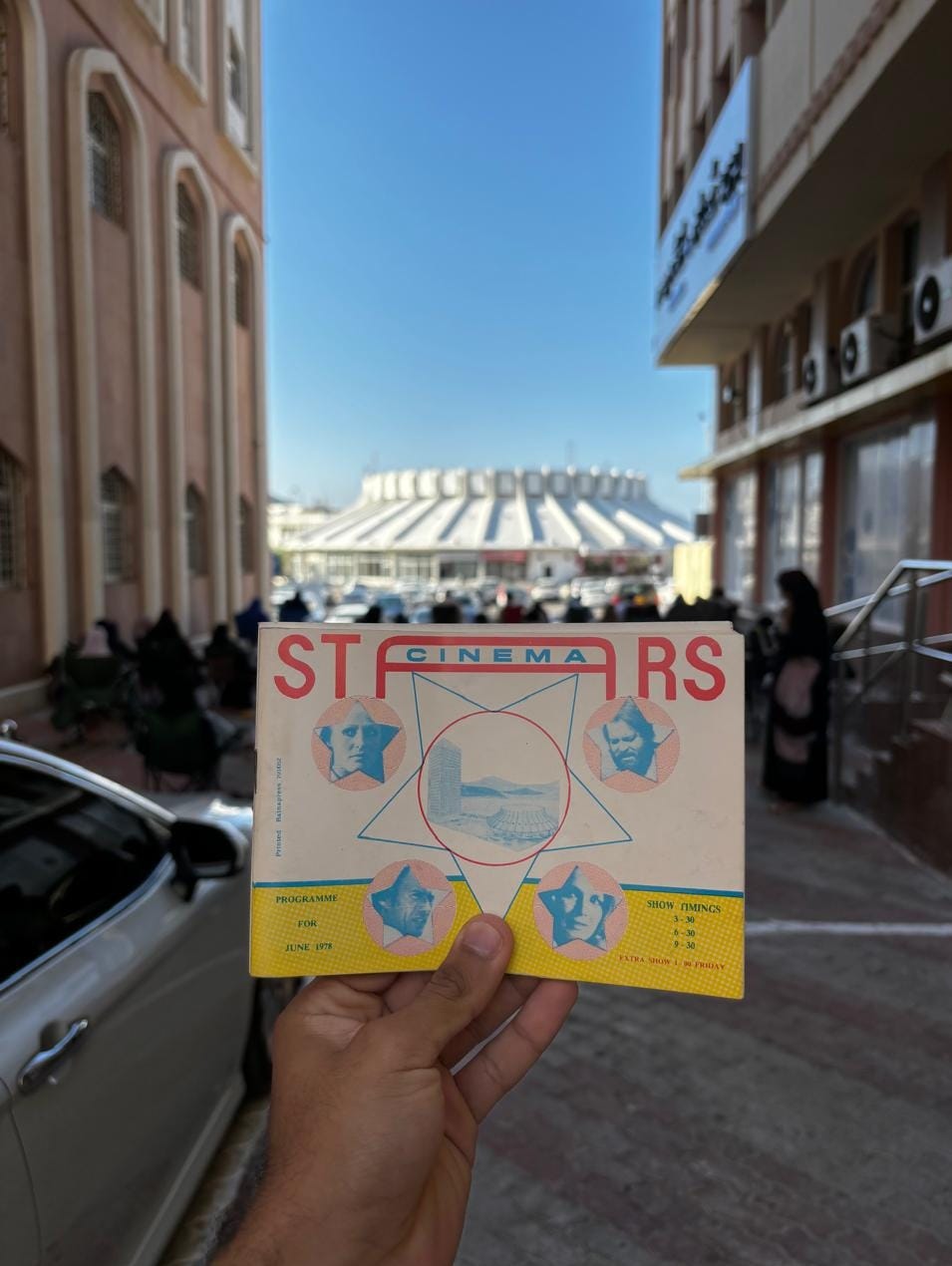
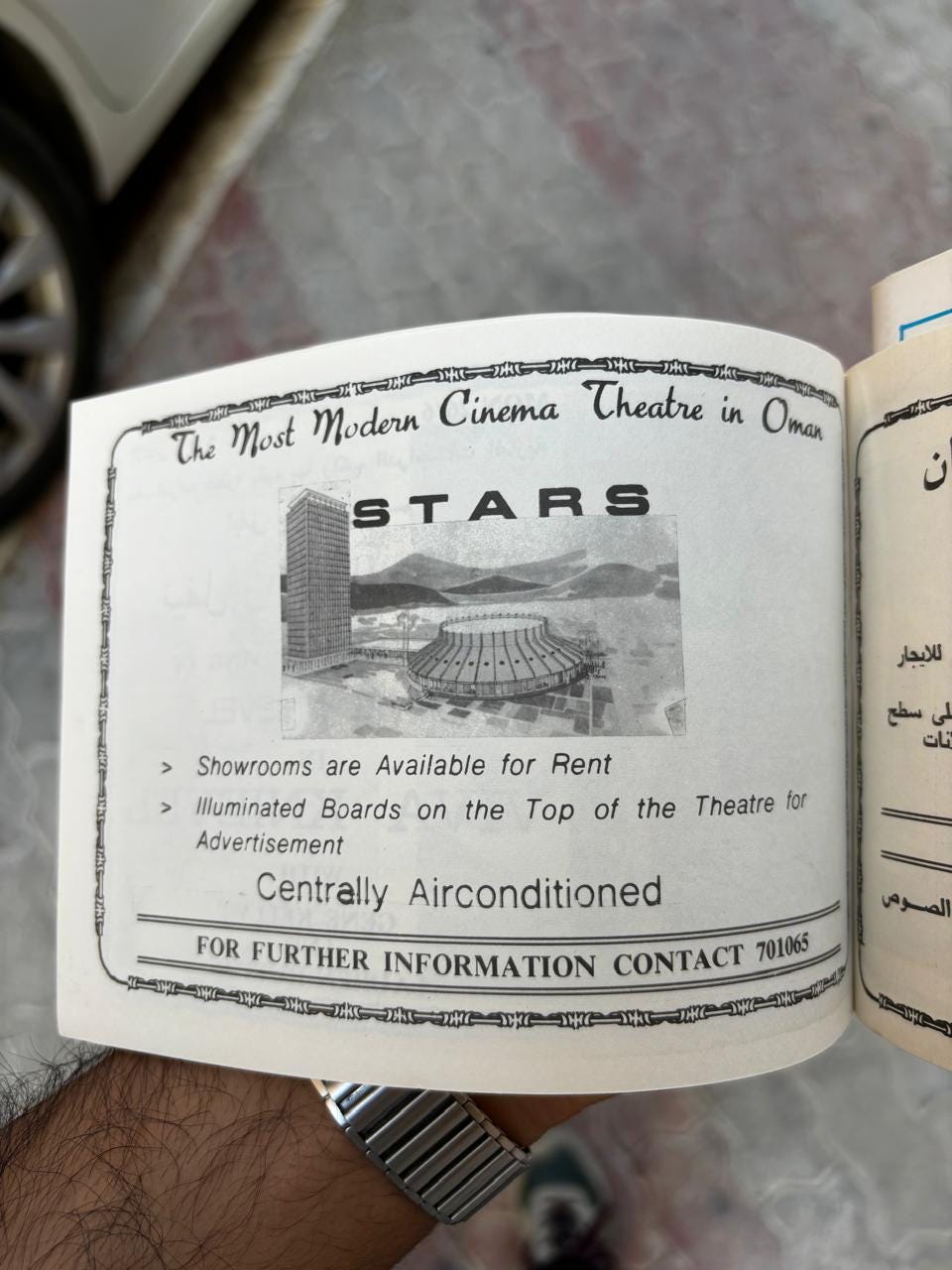
The building sits in Ruwi like a question mark made of concrete and steel. White, curvaceous, unmistakably futuristic—it looks exactly like what it is, which is to say, exactly like what it was supposed to look like fifty years ago when the future was a different country with different customs and different dreams. This is the first thing that strikes you about Stars Cinema: it has aged not into obsolescence but into a kind of temporal displacement, like a science fiction prop that has outlived its movie and found itself marooned in the real world, still waiting for its cue.
The second thing that strikes you is how perfectly wrong it looks in its surroundings, and how perfectly right that wrongness feels. Stars Cinema sits on the ground floor of Muscat's Central Business District like a grandmother's china cabinet that has somehow ended up in an IKEA showroom. All around it, bank buildings climb toward the sky with their own proud heritage—these towers, too, are part of Muscat's story of becoming, their clean lines and mirrored surfaces speaking to a different but equally important chapter of the Omani Renaissance. They are beloved in their way, these monuments to prosperity and progress, each one a testament to the nation's economic transformation. But what strikes you is not their architecture, which is accomplished and dignified, but what they offer: efficiency, transactions, the brisk exchange of capital that keeps a modern city humming. They are places you visit to conduct business, to solve problems, to get things done. Stars Cinema, by contrast, was built for an entirely different kind of transaction—one that had nothing to do with profit and everything to do with the radical act of sitting in the dark with strangers and allowing yourself to be moved by stories that were not your own. The contrast is so stark it's almost comedic—except that comedy, like tragedy, often reveals more truth than we are prepared to handle.
I have driven past this cinema more often than I can count, and for the longest time, I barely saw it. This is how we encounter most of the world, of course—as backdrop, as scenery, as the unremarkable stage on which our presumably remarkable lives unfold. But then something shifted, the way it sometimes does when you finally notice that the word you've been mispronouncing your entire life has been sitting there patiently, waiting for you to get it right. Suddenly, I could not stop seeing Stars Cinema. Suddenly, it seemed impossible that I had ever looked at anything else.
What I saw was this: a building that had been designed to embody possibility, marooned in a present that had forgotten how to recognize it.
The story of Stars Cinema begins in 1970, which is to say it begins with Sultan Qaboos and the Omani Renaissance, with the particular kind of hope that emerges when a nation decides to reinvent itself wholesale. In the space of a few years, Oman transformed from a country that had largely rejected the modern world into one that was racing to catch up with it. Roads appeared where there had been only wadis. Schools opened their doors to children who had never seen a classroom. And in the midst of this extraordinary metamorphosis, someone decided that what Muscat needed was a cinema that looked like a spaceship.
This was not, I think, mere architectural whimsy. In a place where the very idea of moving pictures was revolutionary, where entertainment had been limited to traditional forms passed down through centuries, the building itself needed to signal that something unprecedented was happening. The cinema's white facade, with its sweeping curves and impossible angles, was doing the work of translation—taking the radical concept of collective dreaming and giving it a shape that people could recognize, even if they had never seen anything quite like it before.
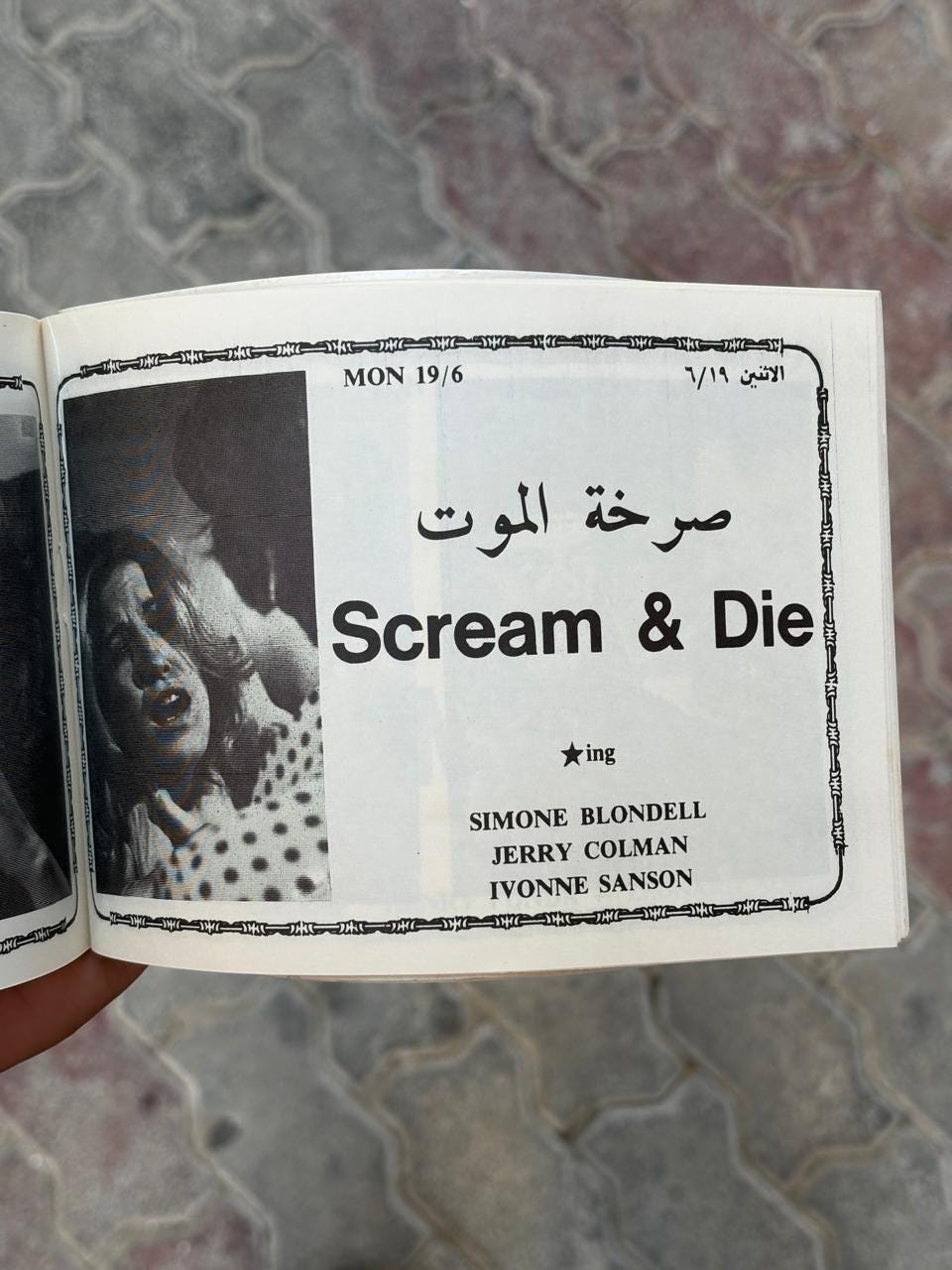
The programming in those early years reads like a love letter to cosmopolitanism: French New Wave films alongside American blockbusters, Italian dramas next to Bollywood musicals. This single screen was performing a kind of cultural alchemy, transforming celluloid into shared experience, shared experience into a common language of modernity. Every film that flickered to life in that dark theater was also a small act of faith—faith that audiences would be willing to be transported, faith that the world was worth bringing home, faith that Oman was ready to see itself as part of a larger story.


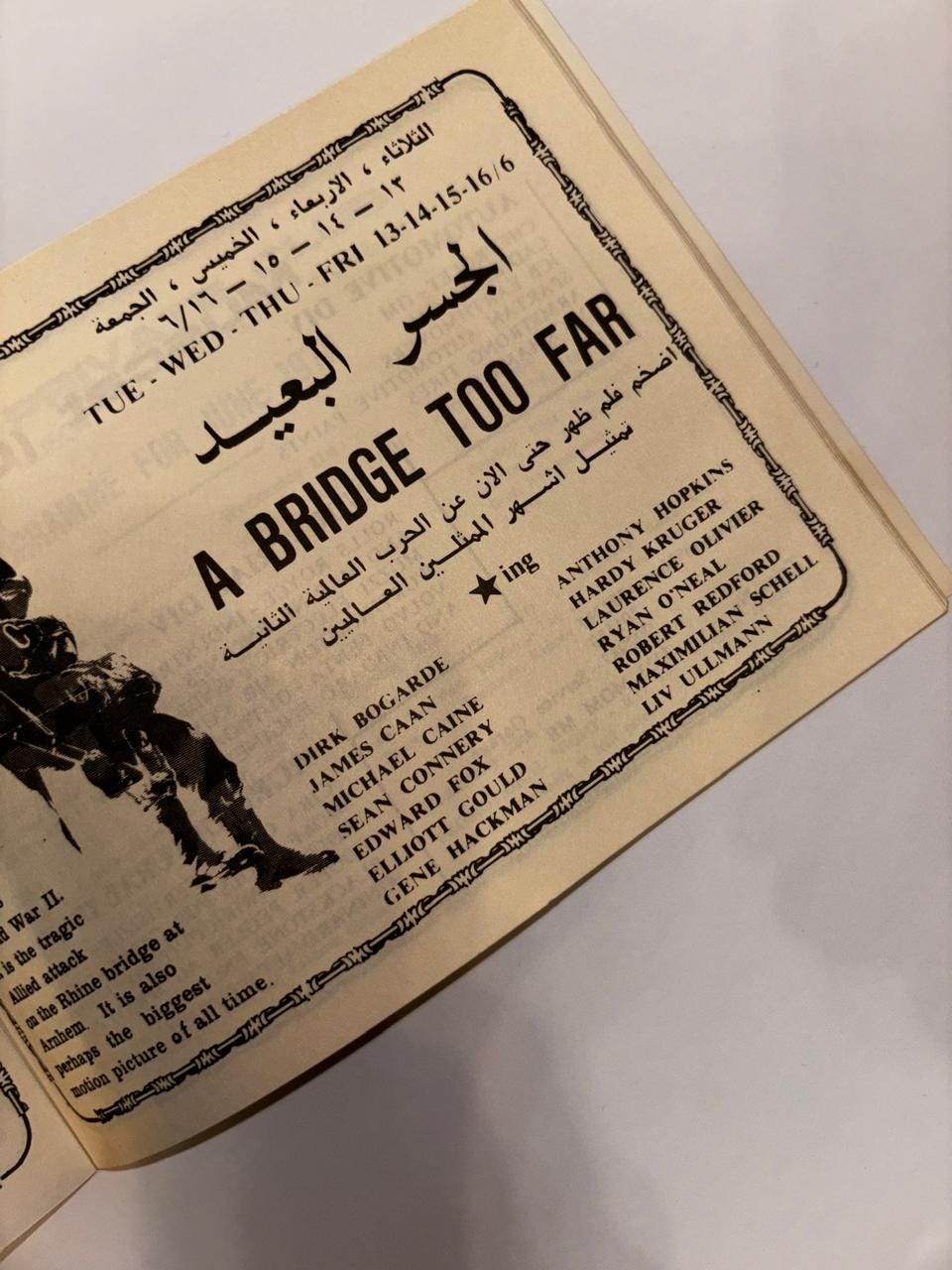
But here is what I have learned about inheritance: it is not a possession but a process, not a thing but a practice. And like all practices, it requires constant attention, constant choice, constant care.
As Muscat grew and modernized, as multiplexes sprouted in air-conditioned malls like mushrooms after rain, Stars Cinema began its slow fade into irrelevance. The cosmopolitan programming gave way to South Indian films for the city's large expatriate community. The crowds thinned. The empty storefronts that now line the cinema's exterior began to multiply like missing teeth in a once-beautiful smile. There were rumors—persistent, credible rumors—that the building would be demolished, that the spaceship would finally be called home to whatever planet it had come from.
This is the point in the story where I expected the ending. This is how these stories usually go, after all: modernity arrives, tradition retreats, progress marches on. The inconvenient past gets swept away to make room for the urgent present, and we console ourselves with the thought that this is simply how the world works, as if the world were a force of nature rather than a series of choices made by people who could, if they wanted to, choose differently.
But then something unexpected happened, the way unexpected things sometimes do when you least expect them and most need them. A different kind of audience discovered Stars Cinema.
They came with sketchbooks instead of tickets, these architects and photographers, writers and artists. They set up beach chairs in the parking lot on sweltering summer afternoons, positioning themselves to capture the building's curves and shadows. They came not to watch movies but to watch the cinema itself—to see it, really see it, perhaps for the first time since it was built. What they saw was not decay but archaeology, not obsolescence but opportunity. Their pencils traced the arches that had been designed to suggest infinite space. Their cameras captured the interplay between the cinema's white surfaces and Omantel tower behind it, a local Eiffel Tower of sorts, giving the sense of a Parisian scene transplanted to the Arabian Peninsula.
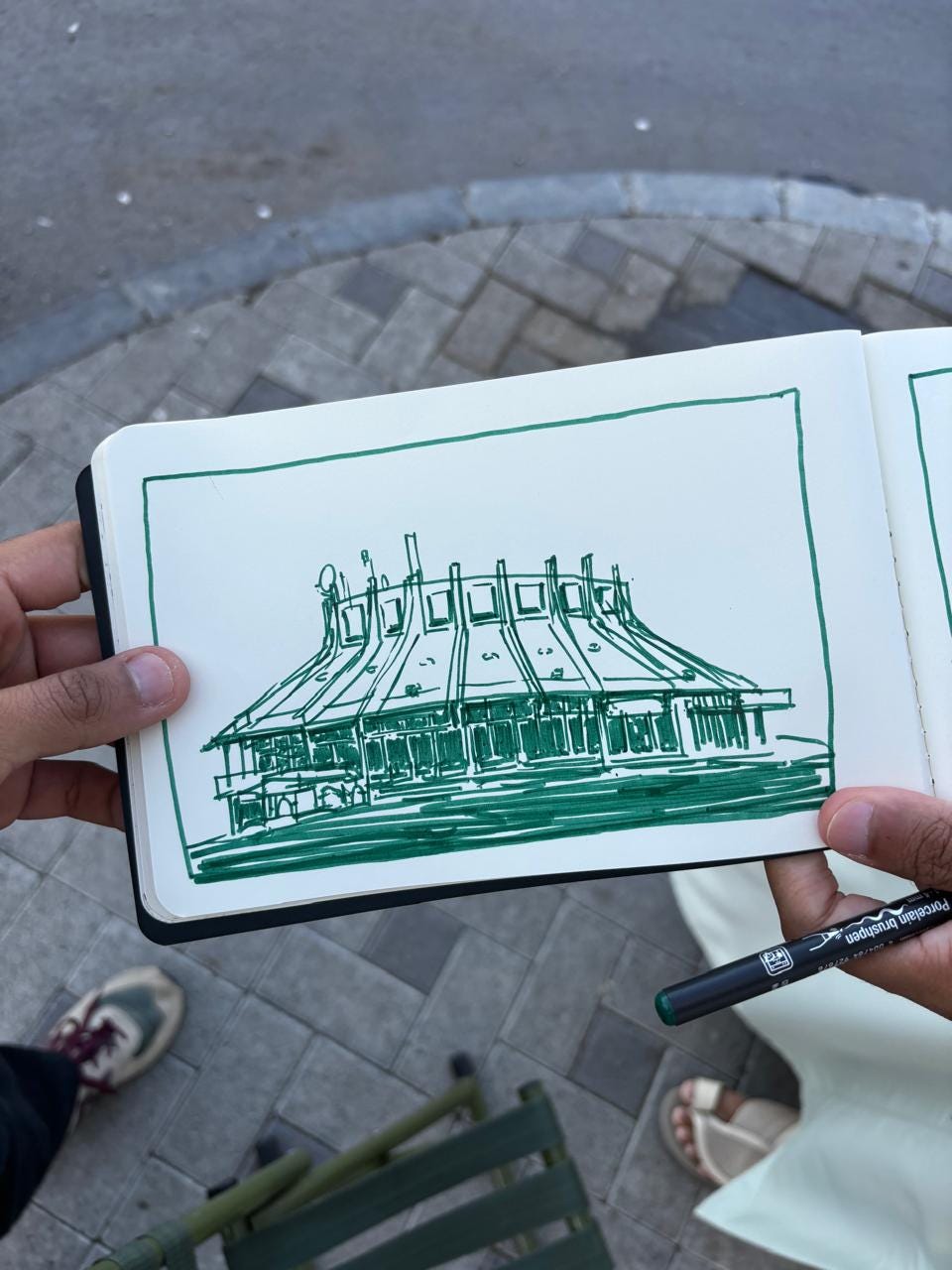
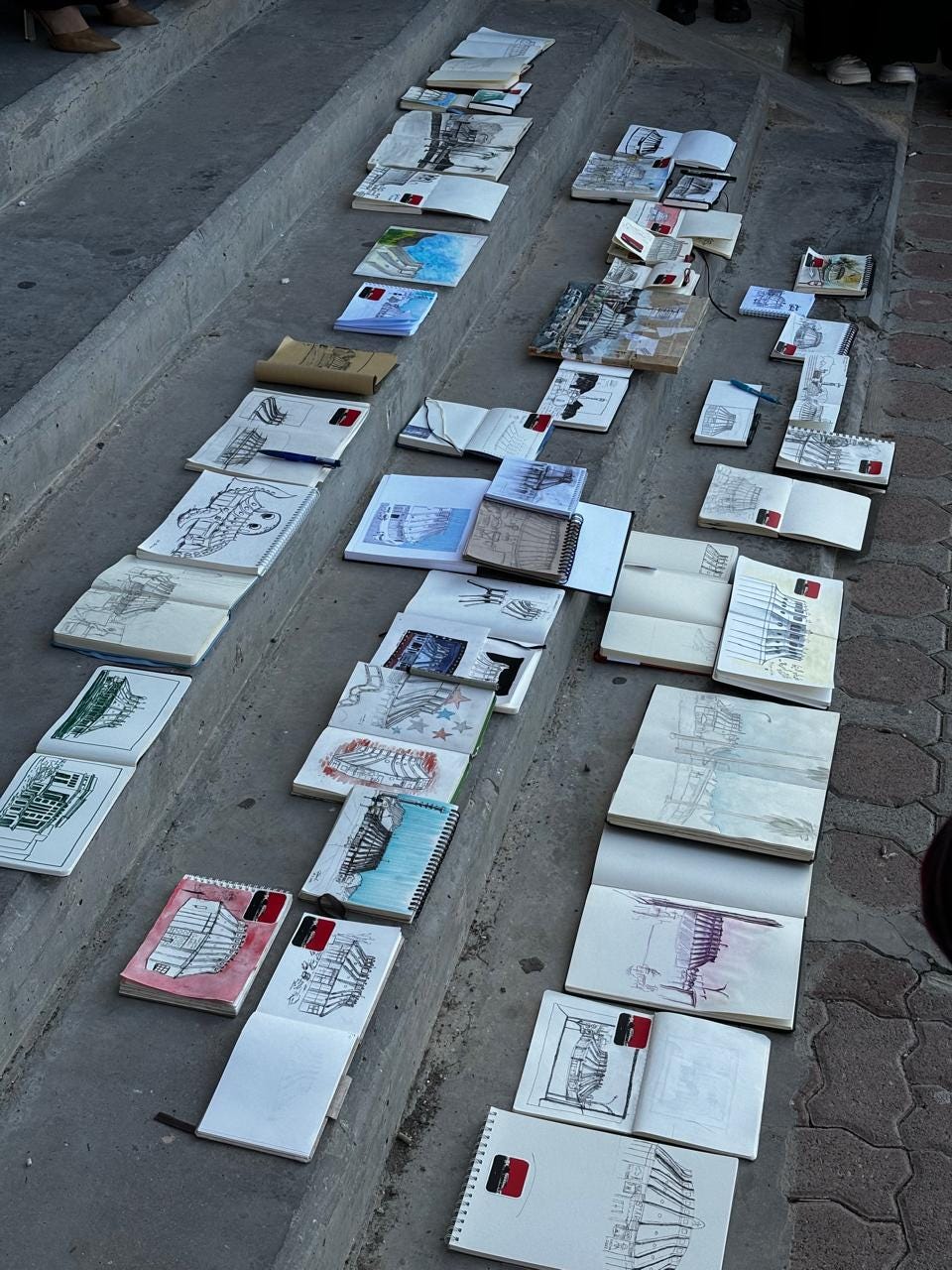
These sketching sessions became something larger than themselves, the way small acts of attention sometimes do. They organized tours—actual tours, with tickets, which strikes me as both deeply poetic and faintly absurd: people paying to see a cinema rather than what was playing in it. They spoke to the owners, collected oral histories, salvaged artifacts. In the projection room, they found the original equipment, those magnificent mechanical marvels that had once transformed reels of film into rivers of light. The leather and wood seats, so different from the ergonomic plastic of modern theaters, spoke of a time when going to the movies was an occasion that demanded a certain formality, a certain reverence for the act of collective dreaming.
What they were doing, I realize now, was practicing a new kind of inheritance—one based not on blood or law but on choice, not on passive reception but on active care. They were taking possession of a memory that was not originally theirs and making it theirs through the simple but radical act of paying attention.
This is how I came to own a ticket stub from a 9 PM show in the 1980s, handed to me in the dimly lit parking lot of a public park by an architect and urban planner whose practice revolves around documenting architectural memory and preserving it. He called it "a marker of trust," this small rectangle of paper with its faded ink and careful perforations. I have framed it in monochromatic red and hung it on my wall, where it serves as a daily reminder that the most important inheritances are often the ones we choose rather than the ones we are given.
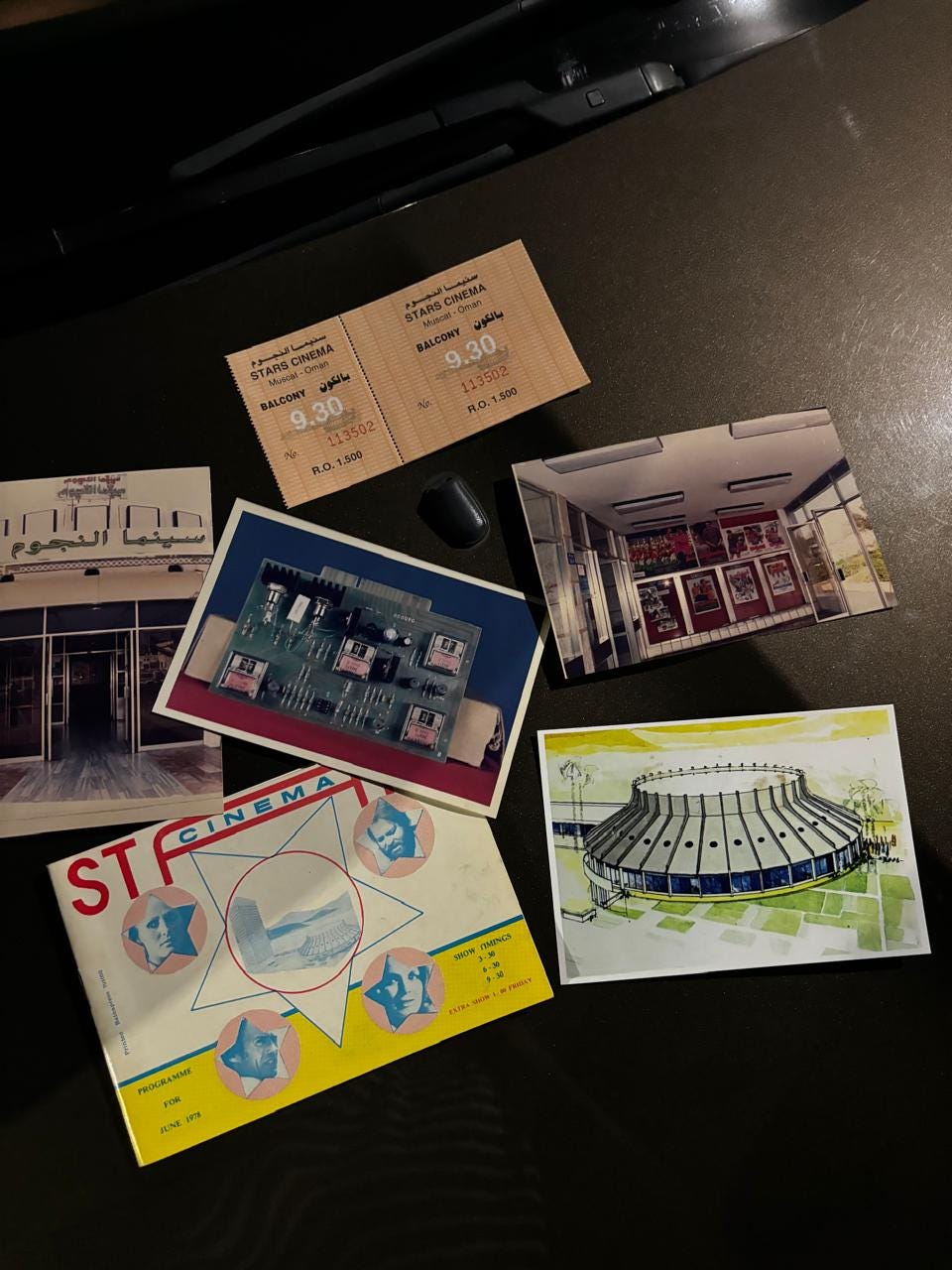
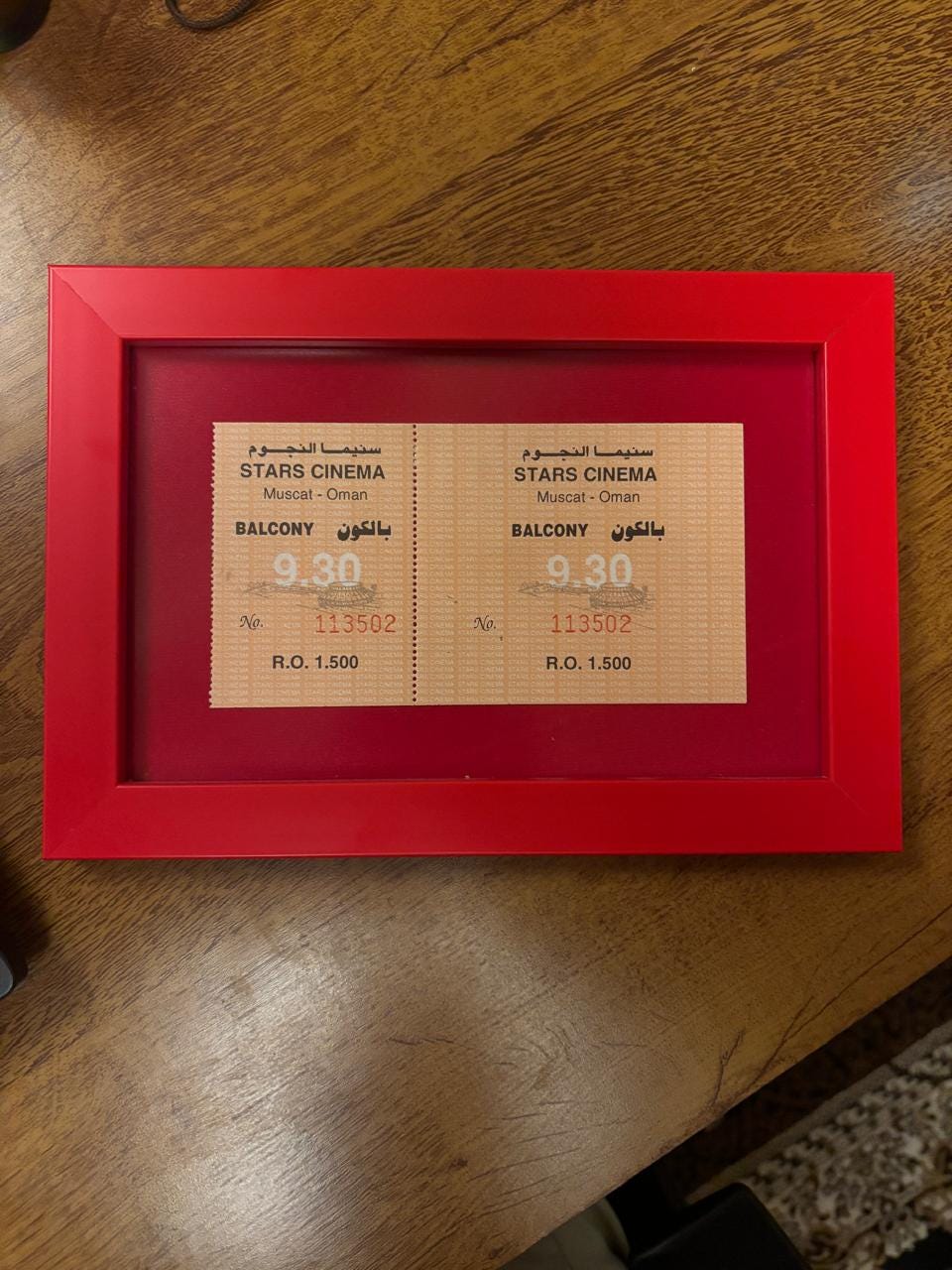
The ticket is more than paper and ink, of course. It is proof that Stars Cinema once pulsed with life, that people once climbed its stairs and settled into its seats and allowed themselves to be transported to other worlds, other possibilities, other ways of being. It is also proof that a new generation has decided that this story—of a spaceship-cinema that landed in Muscat during a moment of national becoming—is worth preserving, worth retelling, worth passing on.
In the end, this is what inheritance looks like in the twenty-first century: not the passive reception of tradition but the active choice to keep certain stories alive. The creatives who gather at Stars Cinema with their sketchbooks and cameras are not trying to return the building to its former glory—they are trying to ensure that its story continues, that its dreams find new dreamers, that its particular vision of possibility does not disappear into the general forgetting that seems to be the default mode of modern life.
They understand what Stars Cinema's original architects understood: that buildings, like people, like nations, are most themselves when they dare to imagine themselves as something more than what they are. That sometimes the most important space a structure can create is the space for possibility itself.
The spaceship still stands in the heart of Muscat, white against the desert sky, waiting for its next transformation. And somewhere in the city, in studios and darkrooms and coffee shops, a new generation of storytellers is working to ensure that when that transformation comes, it will be guided by memory, shaped by care, and informed by the radical understanding that we are not just inheritors of the past but active participants in deciding which parts of it get to become the future.
I drive past Stars Cinema regularly now, and each time I do, I think about inheritance—not as a thing but as a choice, not as a burden but as a gift, not as the end of a story but as the beginning of the next chapter in a story that is still being written. The building looks the same as it always has, white and strange and utterly itself. But I see it differently now. I see it as a reminder that the world we inherit is not the world we have to keep, and the world we keep is not the world we have to pass on. We get to choose. We get to decide. We get to be the ancestors that our descendants will thank or curse, depending on how well we understand that inheritance is not about the past but about the future, not about what we received but about what we choose to give.
3. Weapons: Are the Kids Alright
VARUN OAK BHAKAY
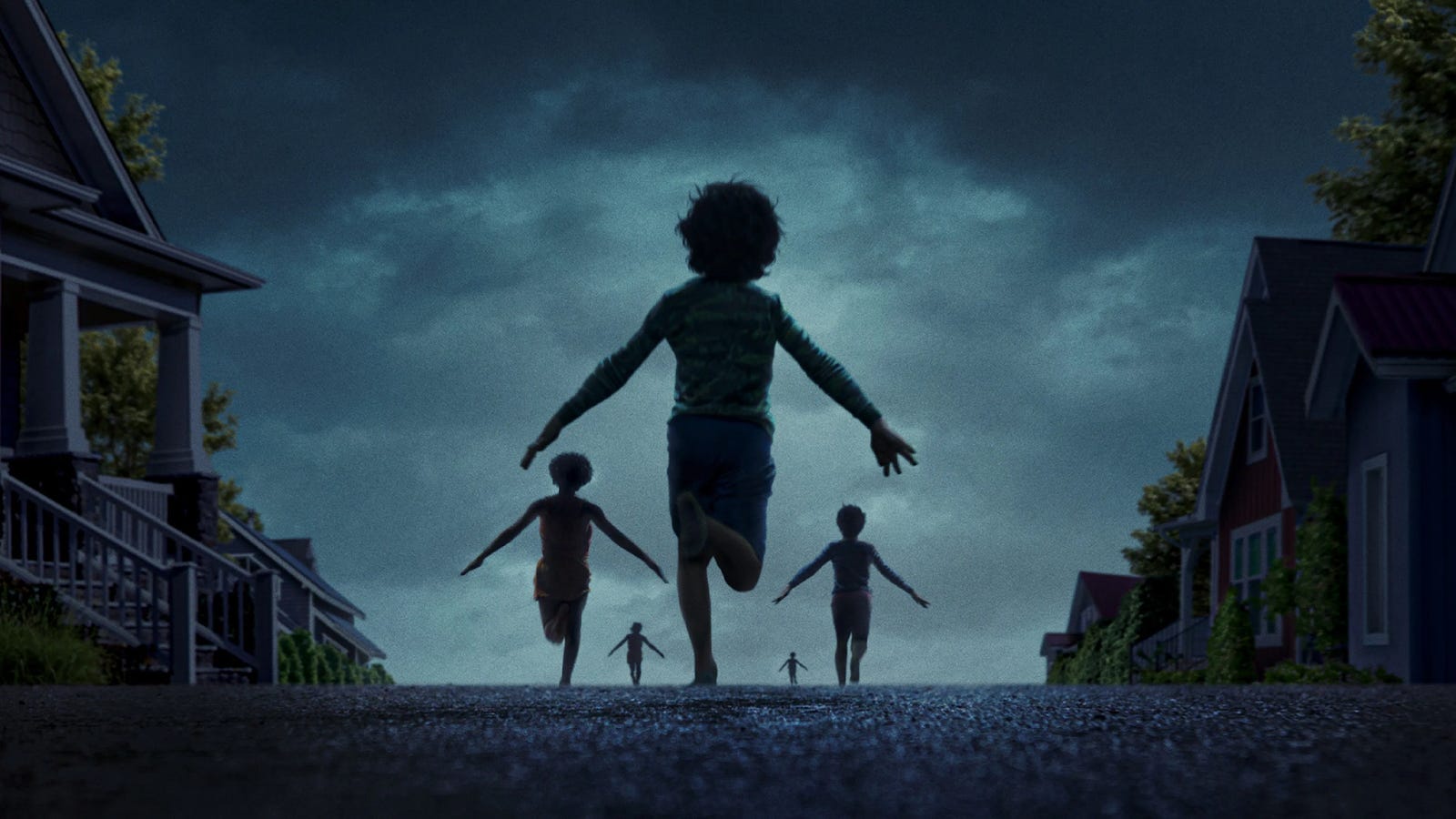
For a film that's trying desperately to straddle multiple identities, Weapons [Zach Cregger, 2025] has somewhat mixed results to show for its efforts. It's eerie alright, but relies heavily on jump scares to catch the audience off-guard; it's a little too funny in the scenes where it wants to go for that vibe, cracking the veneer of a horror film. And somehow, despite these pointed shortcomings, it is immensely enjoyable.
Part of the joy is the complete abdication of one's being to the horror genre that is really the best way to watch such films. Tack on an alcoholic schoolteacher [Julia Garner], an incompetent cop [Alden Ehrenreich], a worried parent [Josh Brolin], a methhead [Austin Abrams], and a silent kid [Cary Christopher], and you have yourself a script! Cregger’s novel idea of having almost an entire classroom of children slip out of their homes in the dead of night and disappear is an intriguing one, but it also means that Weapons plays out more as a quasi-detective drama for much of the first hour. Quasi-detective because the one cop of note is actually pretty useless, and the other adults have the most skin in the game. This, and a narrative that cuts across the perspectives of different characters, are presumably meant to lend heft to the proceedings of Weapons but the film feels overwrought with the range of points-of-view it offers – there are a handful which are counterproductive to the creation of narrative tension, so the film ends up slacking a lot and wastes precious runtime on establishing characters and arcs which wind up nowhere.
What works in Cregger’s favour is his cast: through Garner, he locates the stresses of being a millennial in a workplace whose functions are very much old-school but which need you to have a contemporaneous approach to practically everything; Brolin, also an executive producer, has come to embody the less shiny variant of the dollar that bears Tom Hanks’ face on it – he can be relied upon, but his character and motivations are usually suspect, and he’s never above getting a little rough and ready (the finest version of which he rendered in Denis Villeneuve’s 2015 action drama Sicario). The pick of the cast is its youngest principal: nine-year-old Christopher turns in almost as good a dramatic performance as you’ll see in most films, displaying a sense of being that is unsettling through his portrayal of a lonely boy who nobody has bothered to ask after.
More biting is Cregger’s indictment of American suburbia, whose tranquil bubble he pricks with the habits society has cultivated over the last few decades, where people no longer know their neighbours, where instant gratification takes precedence over structural accountability, where everything – and everyone – is a means to an end. The logical concerns that tend to plague the internal logic of horror films are eliminated by the indifference of the twenty-first century, which is why the funnies in Weapons are a major distraction to one’s consumption of the film. It goes big and bold on the things it wants to highlight, only to return to the laughs and jump scares, only one of which is actually effective.
It would be easy to critique the film’s references – Prisoners [Denis Villeneuve, 2013] and The Witches [Roald Dahl, 1983] are the most obvious ones – but Cregger builds on an idea here, an idea there rather deftly to produce a work that is wholly original and yet manages to be a tribute to precursors.
4. The Process to Avoid the Processed
Observations on Mira Nair’s Early Films
PRAKHAR PATIDAR

Nair hardly needs introduction. She has dabbled with introspective documentaries, hard-hitting docu-fiction, acclaimed features, a Netflix series and even a musical! To evoke the the awe of what she achieved as a young filmmaker, when thinking of her early years I am tempted to call her the Payal Kapadia of the 1980s or perhaps prophesize Kapadia as the contemporary Nair: film students, documentarians with a distinctive voice, and ultimately a Cannes-winning debutantes with an unshakable faith in the collaborative nature of cinema. The parallels are striking, from their cinematographer-partners to the familiar critique that their gaze panders to the West. In Nair’s early films, one can see why — her thesis film and first documentary employ voiceovers that explain contexts for an audience presumed alien to what they’re watching. In a 1988 interview with Thomas Waugh, Nair admitted her embarrassment about these early voiceovers. By then, her sensibilities had sharpened: the perspective of a woman raised in India, educated in the US, and carried by heart and work across continents. Questions of home, belonging, and identity soon took center stage — emerging in Mississippi Masala [1991], flowering in Monsoon Wedding [2001], and reaching full bloom in The Namesake [2006].
But to understand how she arrived there, we must return to the 1980s.
Her thesis film, Jama Masjid Street Journal [1977], began as a silent, impressionistic piece influenced by Peter Hutton but became a voiceover-driven video journal, shot on 16mm by Mitch Epstein — her partner and collaborator through much of her early work. The film is difficult to access, so harder to assess. But her next two documentaries, So Far From India [1982] and India Cabaret [1985], establish the qualities that still define her filmmaking.
So Far From India is a 49 minute documentary about the boom in emigration to the USA explored via interviews with a young couple in USA/Ahmedabad. The documentary begins with a street performer singing tales of long journeys Raam has taken when in exile and then to Lanka for Sita. A nomadic man left behind in the streets of that era, his unpolished voice and evocation of the mythic hero is a peculiarly Indian image. When immediately contrasted that of a bridge framed through the window of a moving car, the juxtaposition lays bare the strangeness of a seemingly simple act: leaving home. Ashok and Hansa wed and separate only 20 days later because of the same reason – Ashok’s move to America. The understanding is he’ll eventually send for Hansa which will further help nest other men from her family wanting and waiting to move. Much like the acquaintance who hosted Ashok and found him a job at a magazine stand. This is not an explicit condition of the marriage but a growing expectation at a time when everyone is emigrating – in the very lane Ashok’s spice merchant family has lived for 40 years in Ahmedabad, every third home boasts of a son overseas. Why? The answer is more complex than money and Nair elaborates this through candid conversations with the couple, their family and verite documentation of their worlds. It has been a year and a half since Ashok moved, he now has a son with Hansa but still no concrete plans of taking her there. He expresses a sense of freedom in the anonymity a stranger society can give you. Perhaps bringing his wife bridges the worlds he wished to keep separate. But the son in the picture is willing to create it. An admission he makes to a determined-looking Nair, who sometimes graces the frames listening intently and asks with direct simplicity and sometimes answers through the voiceover to a folly. It is evident in this first film that Nair is interested in establishing the personhood of those her questions inquire and camera captures. Achieved even better in her second film: India Cabaret takes us inside the bars of Bombay and the hypocrisies of a society that sanctifies the “good” woman while consuming the “bad” one. Of these bad women, self-admittedly baddest is Rekha, a fiercely feminist dancer who’s cracked the code – a woman must keep appearances of submission to whatever is expected of her in and outside the bar while truly only doing what she really wants. Easier said than done but at the end of this hour-long film where Nair takes us through the hells, homes and hearts of those on the fringes, Rekha manages to retire early while having two suitors in waiting and property to her name to have her back. The film closes with Rekha at the beach enjoying her moment of freedom, a visual strongly reminiscent of Kapadia’s women in All We Imagine is Light [2024].
From these early films onward, what strikes most is that to Nair’s camera her subjects are not specimens for the viewer’s curiosity, nor props for her politics. They are people in their own right – messy, contradictory, alive – who grant us access to their lives not because of a filmmaker’s authority, but because of her trust. This candor is not accidental. It is the result of work: of listening, of spending time, of allowing the frame to be shaped by the person within it rather than the other way around.
Nair has often said that she chose cinema because it is a collaborative medium, and that collaboration – her ability to work with people, to create a space in which they can reveal themselves – is her greatest skill. You can see this right from So Far From India and India Cabaret, where even in the presence of narration and shaping, the truth of her characters comes through more vividly than the filmmaker’s hand. The “process” in her films is precisely the avoidance of the processed: an openness that lets the raw, the candid, and the unvarnished shine through.
Picks of the Month
A short list of the writers each choosing the best film/show they’ve watched in the preceding month
Vanij: Fantasma (dir. Lisandro Alonso, 2006)
Varun: Sense and Sensibility (dir. Ang Lee, 1995)
Prakhar: Inside Out 2 (dir. Kelsey Mann, 2024)
Call for Guest Contributors
Cut, And Print! emerged from the shared enthusiasm of a bunch of young film critics interested extending their habit of “living and breathing” cinema to “writing and publishing” about it. While our core team contributes to the Newsletter regularly, we are always on the lookout for people to join our tribe.
If you’re interested in contributing you can -