

#11
Our 11th edition features not one but two unique guest contributions


INTRODUCTION
In this month's issue, Cut, and Print! has quite the bouquet for you, dear reader.
Vanij Choksi dives into Chantal Akerman's The Meetings of Anna and probes the ideas of freedom the film's protagonist and, by extension, its director seem to propound.
Prakhar Patidar reflects on her experiences with two films, one Indian, the other Pakistani, and the dogmatism that plagues both societies as seen through the productions at hand.
Varun Oak-Bhakay looks at new releases Superboys of Malegaon and September 5 through the lens of telling the stories of storytellers in widely different scenarios.
Guest contributions from Sourajit Saha and Raghav Pillutla look at the people-centric non-fiction work of filmmaker Pushpa Rawat and the seemingly gruesome demise of contemporary theatrical cinema, respectively.
1. The Meetings of Anna: A Generative Field of Freedom
VANIJ CHOKSI
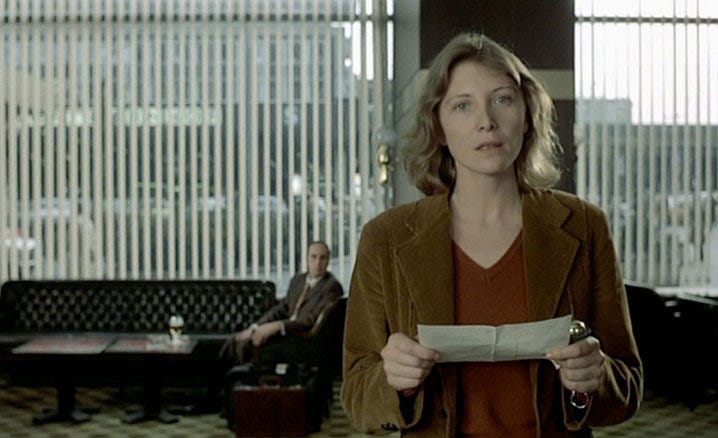
It's curious when Anna – a filmmaker screening her new film in Germany – finds a single pearl-grey silk tie hung in the closet of her otherwise personally unadorned hotel room. So far, she’s been exercising her company alone – as she comes to so often – on one of the two vacated twin beds, picking the right song to play on the radio attached to the wall in between them. A connection with the outside world makes itself felt by manner of traffic honks and the screeching of train tracks she observes through the window, although now there is the more personal case of the tie. Perhaps it belongs to the last inhabitant of this temporarily private space. So she calls the reception. It could possibly belong to the man she spotted sitting in the lobby when she checked in, specifically since he had a small suitcase sitting packed next to him. He was having a beer and getting ready to leave, she recalls perfectly. It isn’t his, yet the detail with which she is able to recall a passing-by event underpins Anna as a present, observant person, and more so, her attention to detail – an asset as a filmmaker. This event as a microcosm, though not always as evident, informs the rest of the film.
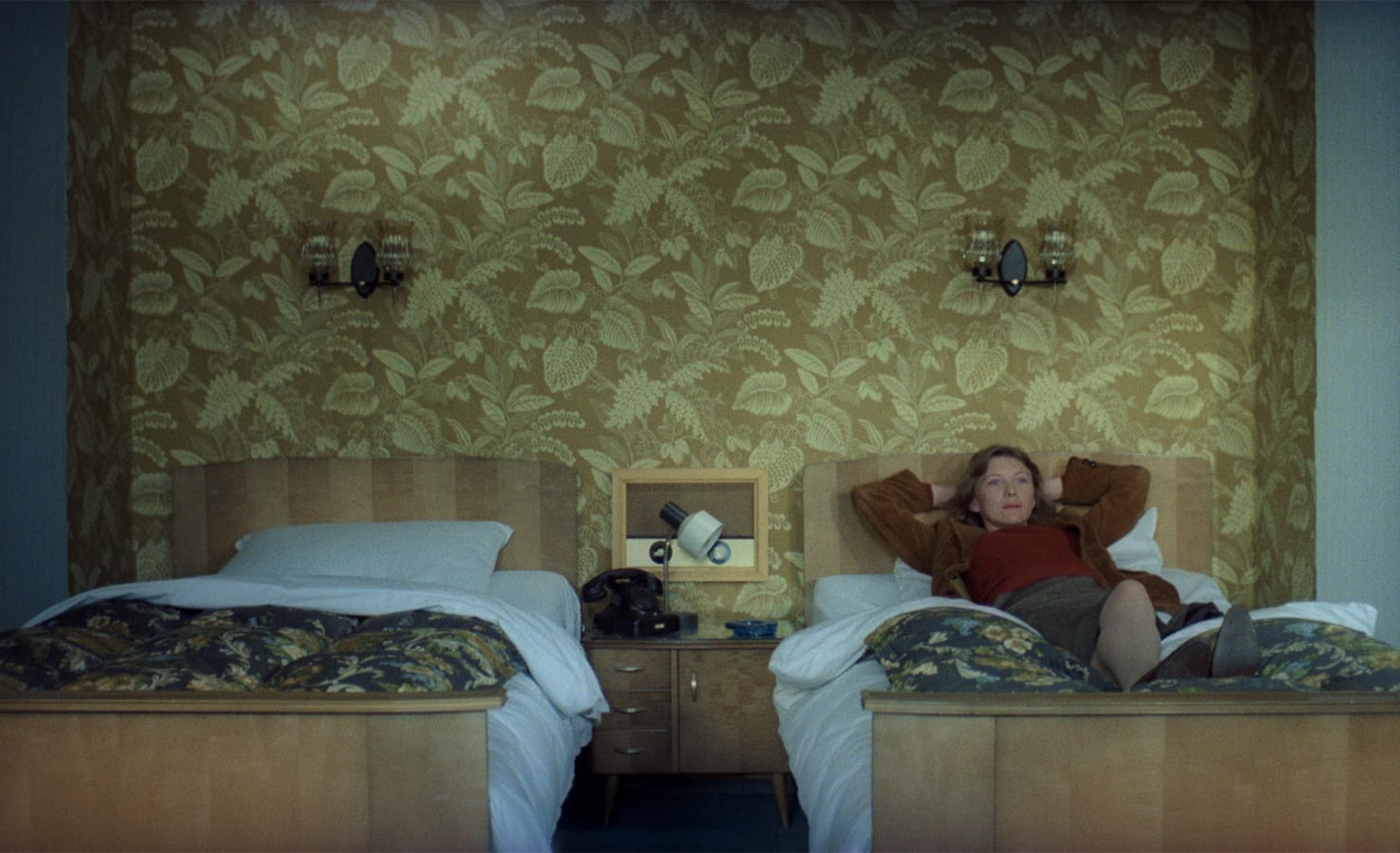
Her often listlessness may be construed as detachment and longing. While some semblance of that creeps through Aurore Clément’s visage as Anna, The Meetings of Anna isn't as simple as the examination of contemporary urban solitude. It’s a more complicated self-study of a young artist. Anna, a surrogate for filmmaker Chantal Akerman herself, encounters a number of people – some strangers, some family – on her way home to Paris from Cologne via Brussels, who noticeably reveal private information about themselves with detail one wouldn’t expect to divulge while creating a first impression. Interestingly, all the strangers Anna encounters are men who in their approach expose perhaps the masculine compulsion to offer companionship to a single woman travelling solo. Yet Anna never behaves deterred. Her inherent presence doesn't belie over-indulgence or naivete, she’s acutely aware of how much of herself she gives to others and how much she reserves for herself. Having said that, she remains a good listener.
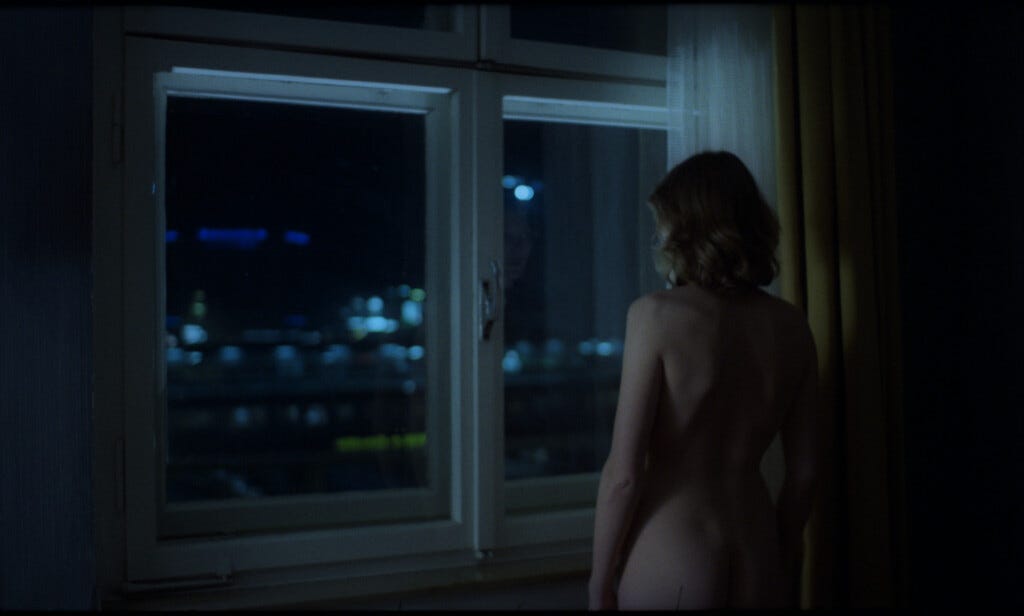
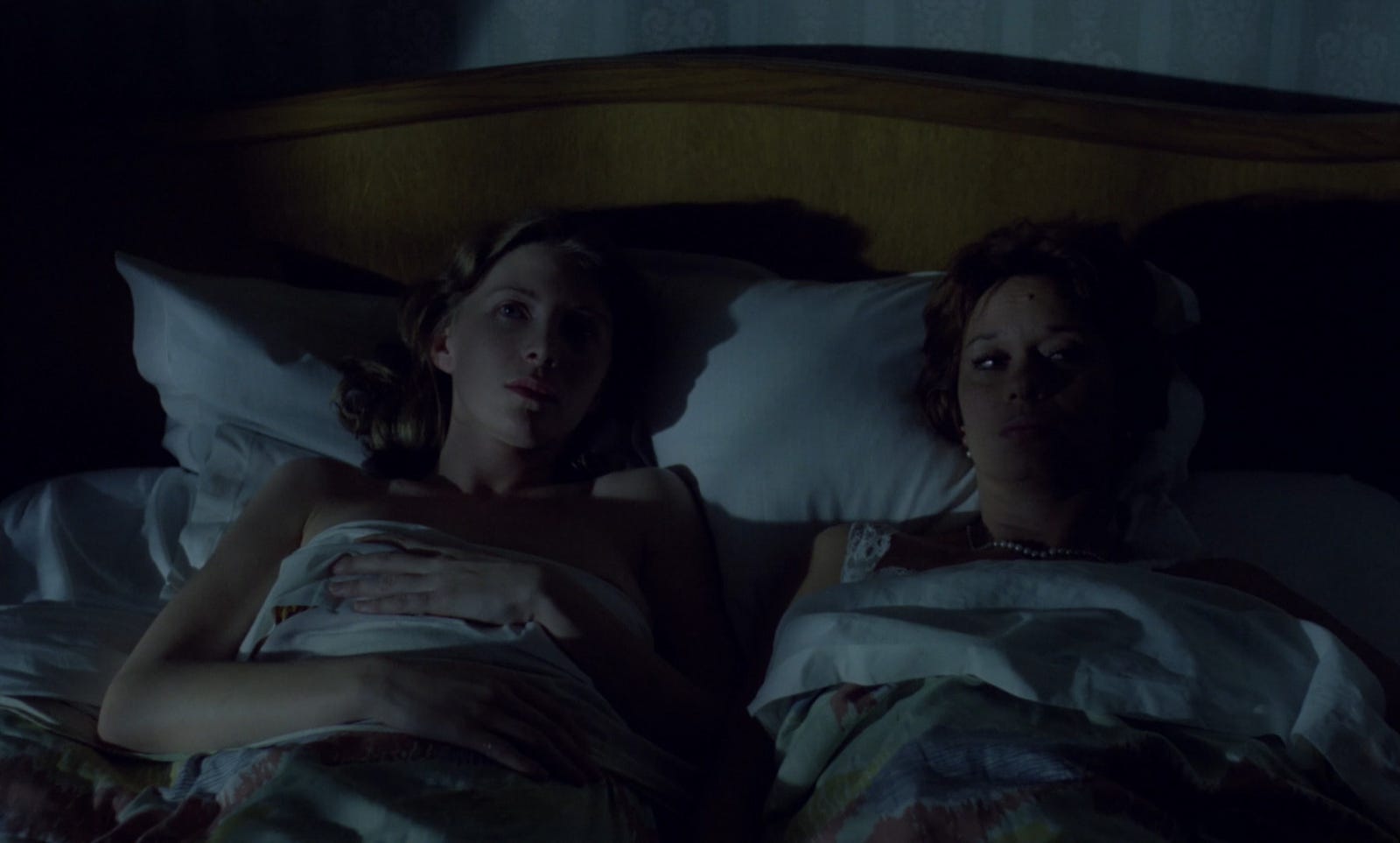
Her first meeting with a stranger occurs right after her film screening in Cologne (which we never see). They share a meal and eventually Anna’s hotel room. She seems slightly uncomfortable in the act until she pauses to turn the radio off. It’s almost as if she’s physically reserving for herself the moment of solitude she experienced earlier that day. Moments later, she asks the man to simply get dressed. This isn't an expulsion from the bedroom as he may believe, Anna merely feels no affection to carry on. She however offers to walk him out and once she returns to the incognito of her blackened room, she’s more comfortable lying in bed naked. One can say she’s prudent with whom she gets completely “naked”. It's interesting too when she visits her mother in Brussels, they rent another hotel room while they wait for Anna’s train to Paris. As they ready themselves for bed, Anna chooses to sleep in the nude. A marker of her benign relationship and connection she evidently shares with blood that isn't as readily given under the pretext of an in-the-moment affectation of a relationship.
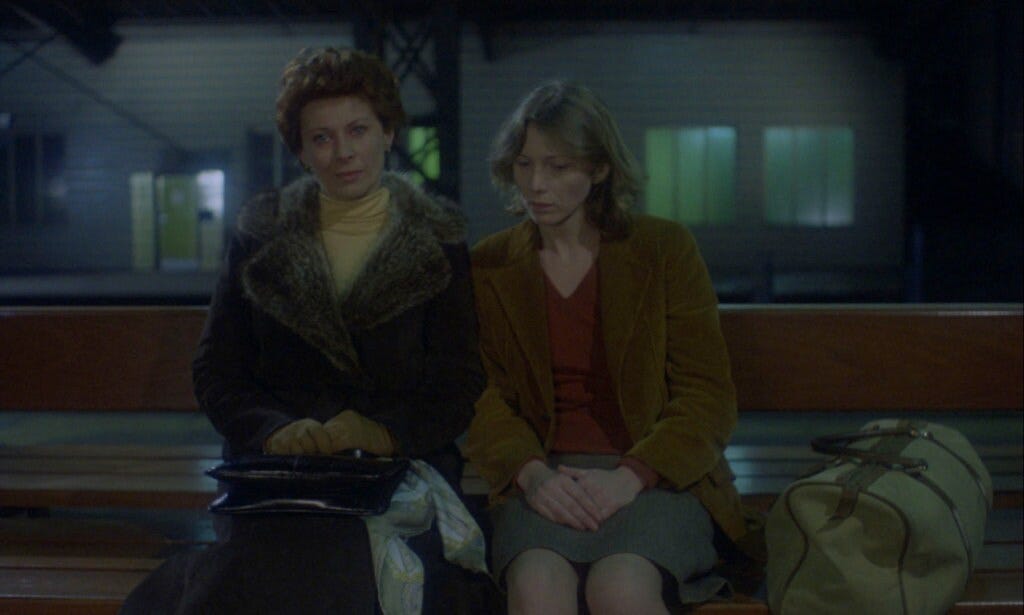
Chantal Akerman, in her debut Je Tu Il Elle (I, You, He, She), playing the protagonist herself, comments on the relationships one has with oneself and others that inhibit the world. In one of the film’s most hypnotic scenes, Akerman’s protagonist hitchhiking with a truck driver – who she sleeps with – sits in the passenger seat quietly as he narrates his story about his troubles, marriage and children (in fact we don't hear her speak diegetically until the film’s climactic scene, it’s more about her sustained presence). It's an incredible scene imbued with the patience and lack of prejudice it takes to see people for who they truly are – having a conversation with someone even if it means simply listening. That unbroken meditative sense finds its translation into Anna’s being when she meets an old family friend at a train station. While she seems like another motherly figure, she’s a bit cross with Anna for spurning her son just before their wedding a few years ago. She reasons with the narration of her own marriage and how Anna’s incomplete engagement sees her ignorant to the essential duties of womanhood, although recognising in her diction the regrets, pains and sufferance in the execution of her perceived duties makes one wonder whose sense of incompleteness she is ultimately referring to. In her physical responsiveness and emotional proximity to the conversation, Anna’s attitude here expresses an inner desire for wait that another generation would still consider nascent experimentation, unsuitable for a woman her age, yet her empathy shines as they part: “Whatever you do, don't worry. Everything will be fine.”
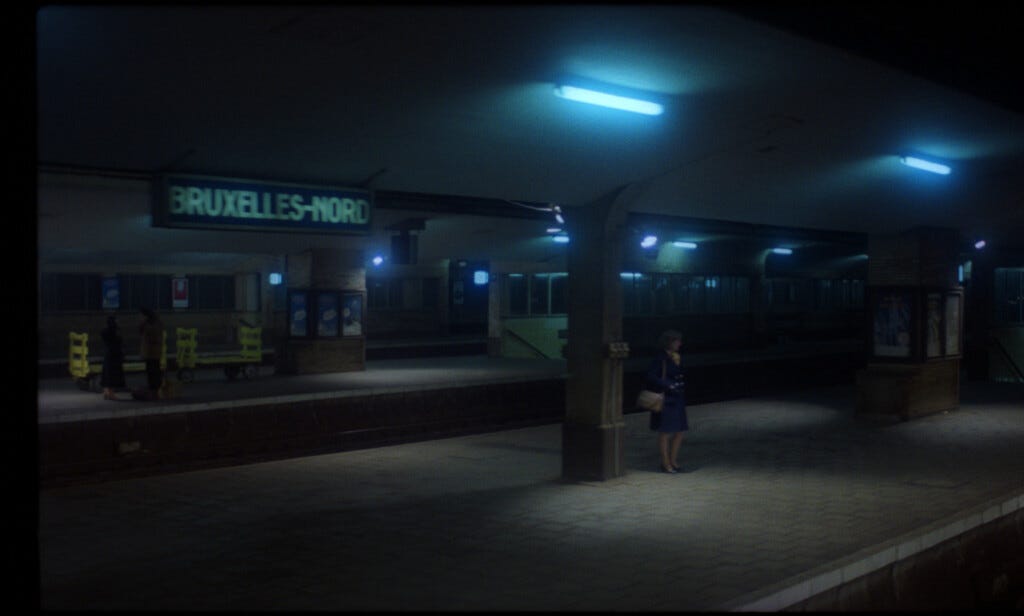
Aboard the train, its screechy sliding windows overlook the inverse lives that toil behind the scenes of night-time at deserted platforms. Similar to her aimless observation of cars and trains from her hotel room, now looking out of the vessel that formerly captured her attention at the whooshing by of objects and labourers lit alike by the fluorescents of dim tube lights, one can't help but notice, from Anna’s point-of-view, the contours of her gaze approximating our cinema screen, projecting life in its quiet transience – a moment in time pushing itself in the opposite direction from which it arrived. Such insight into Anna’s person and the way she sees things, laid excruciatingly bare, poses but the most inevitable question: what would the film directed by Anna look like? Her obsession with observing and listening to the world and people clues us into Anna’s desire for understanding and connecting with others and herself, an attitude which perhaps formulates her primary inquiry as an artist. And if this film’s autobiographical elements of Akerman’s gaze is any metric, wouldn’t Anna’s film reflect similar observations and callings as Akerman’s film does? The very object of Akerman’s observations and experiences which has informed her style and the intonations of her protagonist is the subject of her film – and one can then only imagine the similarities of style and intonations imbued into Anna’s work. It's almost as if the film we’re watching could be directed by its protagonist, and in some way, it is – considering Akerman a silent protagonist here as well. If this film viewed as an example of Akerman revealing part of her personality and anxieties coded in a medium that has come to define an aspect of her life, her (and by extension, Anna’s) filmmaker-individual persona blossoms in deliberately not depicting Anna as a filmmaker and herself as a person on screen. Deeply rooted in its very conceit, Anna and Akerman each fill in the parts of the other's lives that the film doesn't show, helping us understand them simultaneously as both an individual and a filmmaker – the compositing of various personal facets that form the veritable human-person before us. And now we too have connected a bit with the world. The Meetings of Anna is so much more than a film, it’s the filmic representation of the artist's (Anna and Akerman’s) person.
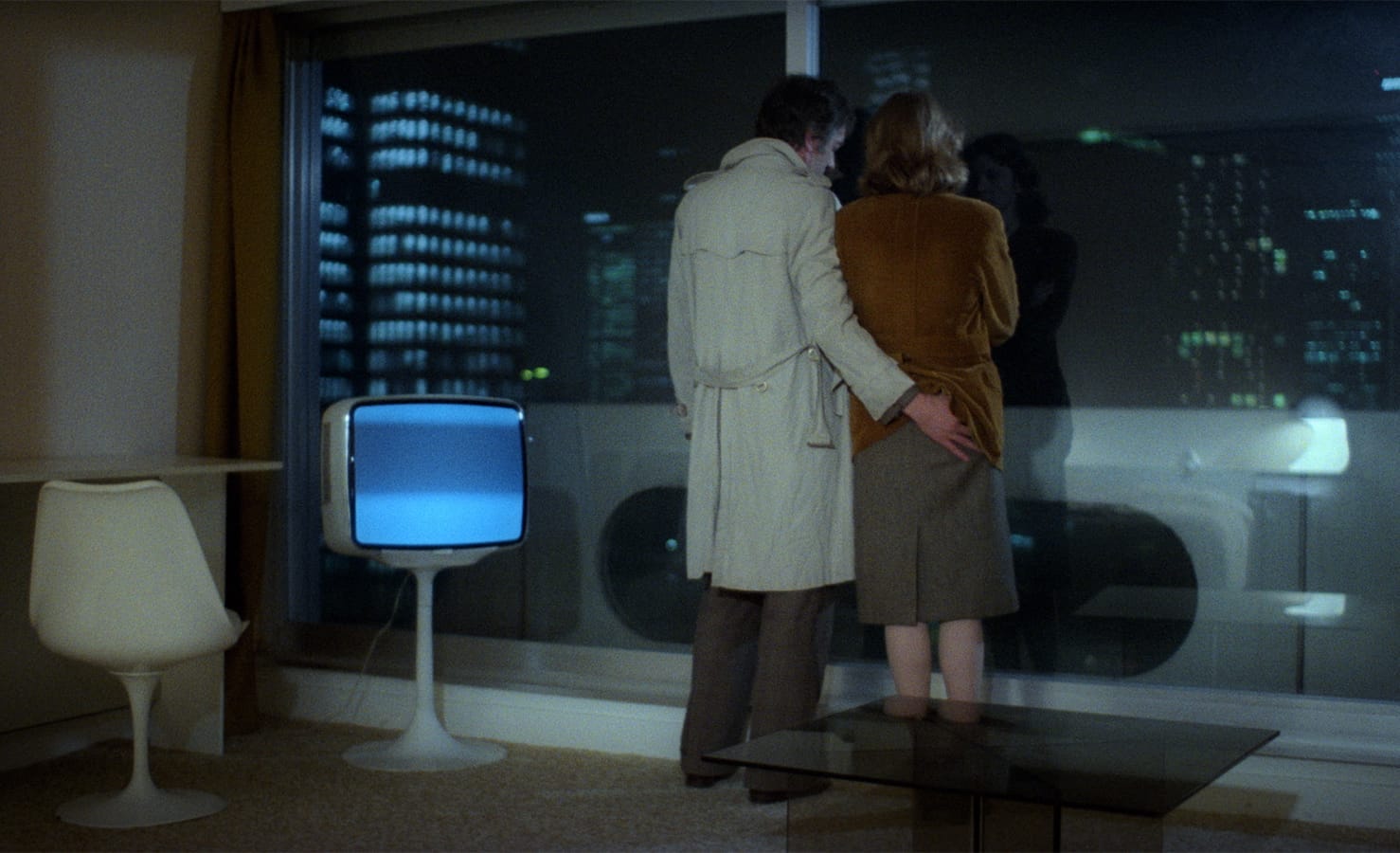
Back in Paris now, Anna meets up with Daniel – a sort of lover, although they don’t seem to share a relationship. In yet another hotel room – a motif of a strange melting pot of private listlessness and benign companionship – Anna and Daniel decide to spend some time together, their hands reaching out with a desperate desire to touch. Apart from Akerman, there is perhaps no filmmaker who has so unabashedly drawn focus to the innate, carnal desire of one’s skin rubbing vigorously against another’s, the private fantasies and satisfactions of individuals, and the pure love and pleasure it takes in giving and receiving it; detailing every inch of its oddity. Nowhere is this more stark than in the climactic scene of Je Tu Il Elle when the protagonist (Akerman), now dropped off by the truck driver, visits an ex-girlfriend's apartment. There’s clearly been a lack of communication between them for a while – “I’m hungry” breaks their silence, the only diegetic dialogue we hear from Akerman throughout the film. The comfort of the ask and the alacrity with which it is responded to allows us a peering gaze into the dynamic of whatever relationship they have shared, before being plunged into an infinitely wide aperture. In a scene over ten minutes long, we see the women explicitly make love, grasping and pinching at every inch, contorting themselves to feel the weight of the other. Much like that, we’re privy to Daniel passionately caressing Anna’s bottom, asking her to sing him a song and lie on top of him. In Je Tu Il Elle, although Akerman had slept with the truck driver previously, and Anna had had a sexual encounter with the first stranger, the coming together and release of bodies in their respective scenes, exists as a relationship they share in the present. That is perhaps at least how Anna and Akerman see it. At this point, both women would probably be labelled promiscuous and unethical according to our notions of how people interact, thus the detachment of Anna from the world perhaps refers not to an emotional reclusion of some sort into solitude but a rejection of contemporarily upheld belief, which inevitably fuels alienation from a perceived order. Her emphasis on the creation of human relationships informs her that physicality need not extend ultimately to romantic proportions, nor in any form are these relationships superficial either, they simply exist as something of their own, something our perceptions have been societally queered to recognise, a kind of valuable connection that doesn’t need to be labelled. And sharing that connection with others too means that Anna, young, confused but steadfast as she is, is simply keeping her options open in the sculpting of a personality. At one point, she even mentions a sexual encounter with a woman, which at first felt strange but was an experience unlike anything she expected to find liberating. For the entirety of our acquaintance with Anna, we’ve seen her resist widely accepted moral codes and for that matter, it's worth mentioning that Akerman is usually grouped within feminist and queer thinking, but she articulated her distance from an essentialist feminism. She [Akerman] resisted labels relating to her identity like "female", "Jewish" and "lesbian", choosing instead to immerse herself in the identity of being a daughter; she said she saw film as a "generative field of freedom from the boundaries of identity". She advocated for multiplicity of expression, explaining, "when people say there is a feminist film language, it is like saying there is only one way for women to express themselves". For Akerman, there are as many cinematic languages as there are individuals.
When Anna returns to the emptiness of her street-lit Parisian apartment, she’s overcome by an ennui that we’ve shared with her all along. She has tremendous care and love for the world, especially the people closest to her and has possibly come to terms with the fact that the way she inherently is does not assimilate to the way the world works, although something tells me Anna realises that to be a contributing part of the world she must resist its impositions on her. She may be lonely and doesn't derive any pleasure from it – that is the pain she must bear from her resistance as opposed to the pains of continuous singularity by closing aspects of her personality in the service of expectations that are attached to certain labels of her assigned identity, which she recognises are borne by the women and generations that preceded her – her loneliness is not of seclusion, rather of not being understood. She isn't, however, pitiful of the fact. In assuming her fate she allows herself to experience the varied offerings of the world many are intentionally consigned to never know. Unbound by identity, Anna allows the happenings of life to her. Once she has, the world is her’s and she may shape it as she pleases.
2. Faith, Fables and Fear
PRAKHAR PATIDAR
Films in conversation: Sarmad Khoosat’s 2022 Pakistani fantasy-drama Kamli, Shiladitya Bora’s 2023 Indian tragic-comedy Bhagwan Bharose, and the dangers of religious dogmatism across borders.
India and Pakistan, sister countries and archenemies, have a lot in common. This is a statement that is bound to ruffle sentimental feathers, but jingoism can’t erase a shared colonial past and a grip of religious fixation that followed. Albeit, the latter is in varying degrees and, though true for the majority, is not a sweeping reality — or that is the hope at least. One could argue things aren’t as bad as across the border. And depending on which side one is, the sacred power of monotheistic homogeneity or the secular strengths of tolerance are posited as determinants of peace in the land. Both arguments stem from the state’s desired singularity of personhood, citizenship, and faith, all three facets of identity emerging from and ending at religion. What happens when a doctrine meant for the personal leaks into the political, social, and cultural?
Repression, ignorance, and conflict are themes central to Kamli and Bhagwan Bharose, two films released around the same time and curated in the 2023 film programme of the UK-Asian Film Festival. This piece has emerged from my participation in the festival’s Emerging Curator’s Lab 2025, a space to nurture young voices in film programming and criticism. Viewing of each film is a unique instance, and I doubt I’d have encountered the films together if not for the lab. Watching them back to back for prep sessions in the lab, and the discussions that followed, enabled a unique instance of seeing two very different films in conversation with one another because of the thematic threads that bind them.
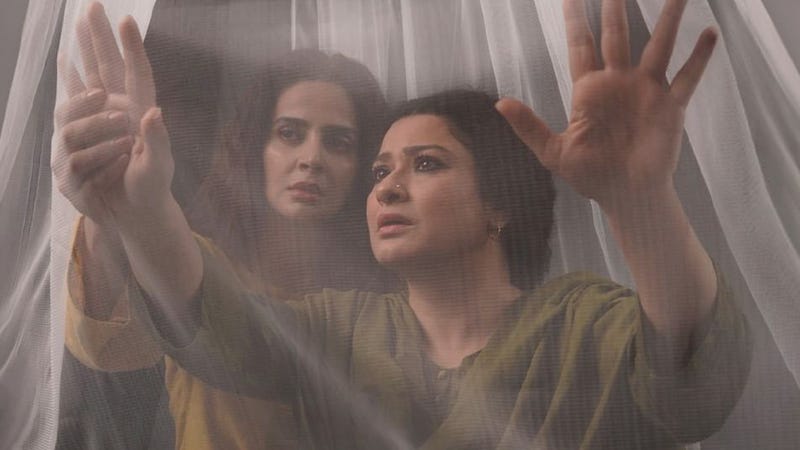
Kamli, set in rural Pakistan in the 90s or earlier, follows the intertwined storylines of three women — Heena (Saba Qamar), whose husband leaves the country for better prospects and never returns; her visually-impaired sister-in-law, Sakina (Sania Saeed); and her employer, Zeenat (Nimra Bucha), a bohemian painter stuck in a life and marriage torn apart because of childlessness. In a clever giveaway for what’s to come, the film floats on fantastical storytelling devices — folktales, fables, and impressive surrealist sequences. Entrenched in endless waiting, Heena’s days are stretched into a loop of longing for a partner, agency, and freedom, spent in a depleting home with her dependent sister-in-law and at Malik Saab's (Omair Rana) mansion as a muse to his unhappy artist wife Zeenat, and restricted to the confines of their small village. It is on the route from married ‘maidenhood’ to muse that her desires daringly beckon her free will. In an immersive scene featuring feathers, a stream, and saving, the film solidifies its commitment to its genre, and despite being six songs too long, continues to deliver its poetic tonality throughout. While Heena, played with moving sincerity by Qamar, is the protagonist, it is Sakina, the supposed villain, who is of interest to this article. She too is a victim of her circumstances — blind and betrayed, she must confine Heena to the trappings of what a young woman of faith ought to do. In this scenario, Heena must waste away in waiting. Sakina’s near-constant reminiscence of a happy past that’ll be their future again only in a matter of time, her fear-fueled reiteration of religious determinism, and her tales of tragic women who disobeyed imprison both her and Heena in a reality only escapable through delusion or death.
Sounds familiar, no?
Ideal prisoners citizens are god-fearing individuals with undying faith and ignorant reverence for fables. At least, such is the case in the mirror Bhagwan Bharose holds to the India of 1989, and even more pertinently, to the India of today. Two impressionable boys, Shambhu (Satyendra Soni) and Bhola (Sparsh Suman), navigate rural life, the modernising intervention of television, and the science versus religion dilemma amidst rising communal tensions. We meet these two young, naïve, and free-spirited protagonists requesting a glimpse of hell from the local wish-granting well. Hinduism, with its many gods, goddesses, and demons, anchors their curiosities and offers a lens to perceive the world at their disposal — until they are enrolled in school. Convinced that gods must always be pleased and appeased and that all that goes wrong is their wrath, the boys keep a prayer handy to avoid any punishments. If only prayers solved socio-political conflicts. As their hearts, minds, and experiences expand, Bora also zooms out, slowly revealing the complex setting of the film — the socio-political turmoil of the rising right-wing waves in the late 1980s that would result in the demolition of Babri Masjid. To see these young boys get radicalised so easily is a reminder that children, though always seemingly lost in their own world, aren’t immune to hate.
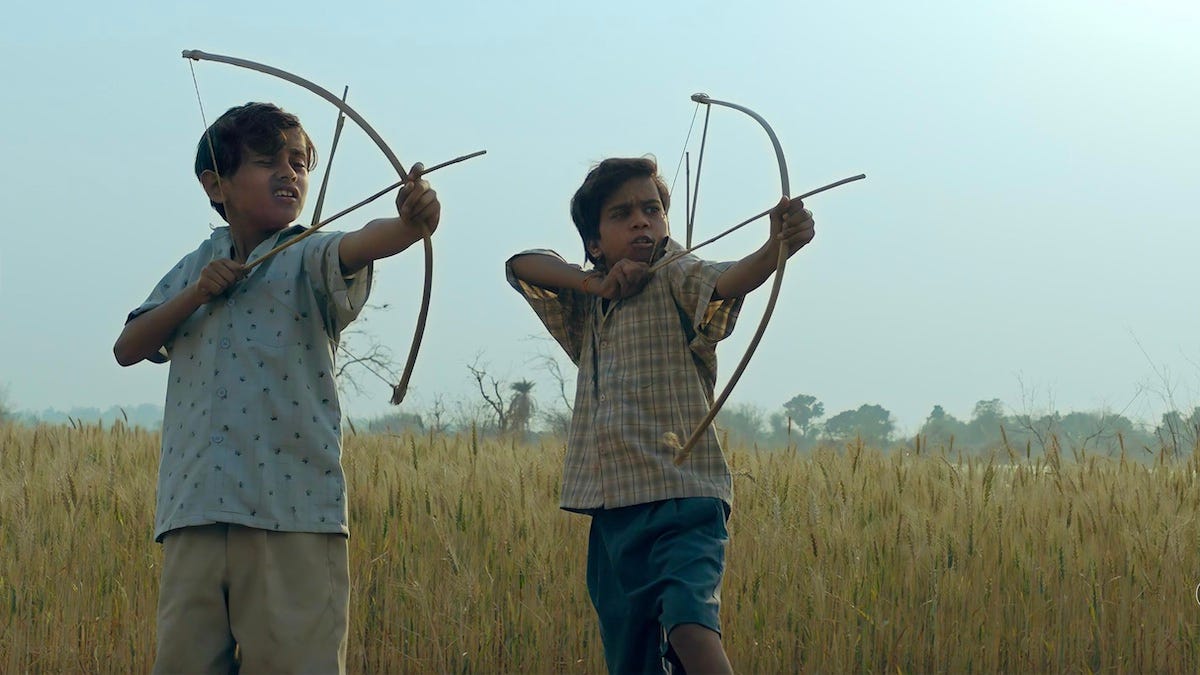
Both Kamli and Bhagwan Bharose unravel the subtle and sinister ways in which faith, when weaponised, becomes an instrument of control. Though separated by borders, cultures, and faith, the fates of their protagonists echo one another — Heena and Sakina, Shambhu and Bhola — all caught in the push and pull of belief and autonomy, devotion and disillusionment. In their worlds, faith is less a quiet refuge and more an inescapable labyrinth, dictated by the whispers of elders, the mandates of the state, and the invisible grip of inherited fear.
If faith is to be a guiding force, must it always demand submission and all of one’s identity, or can it make room for doubt — for freedom? The answers, much like the fables, remain open-ended. But in watching, in questioning, we begin, at the very least, to pry open the walls.
Note: The author watched these two films from the UK-Asian Film Festival’s 2023 programme at the festival's Emerging Curator’s Lab 2025. She does not represent the festival, and this is an independent piece.
3. Retelling Storytelling: Superboys of Malegaon and September 5
VARUN OAK-BHAKAY
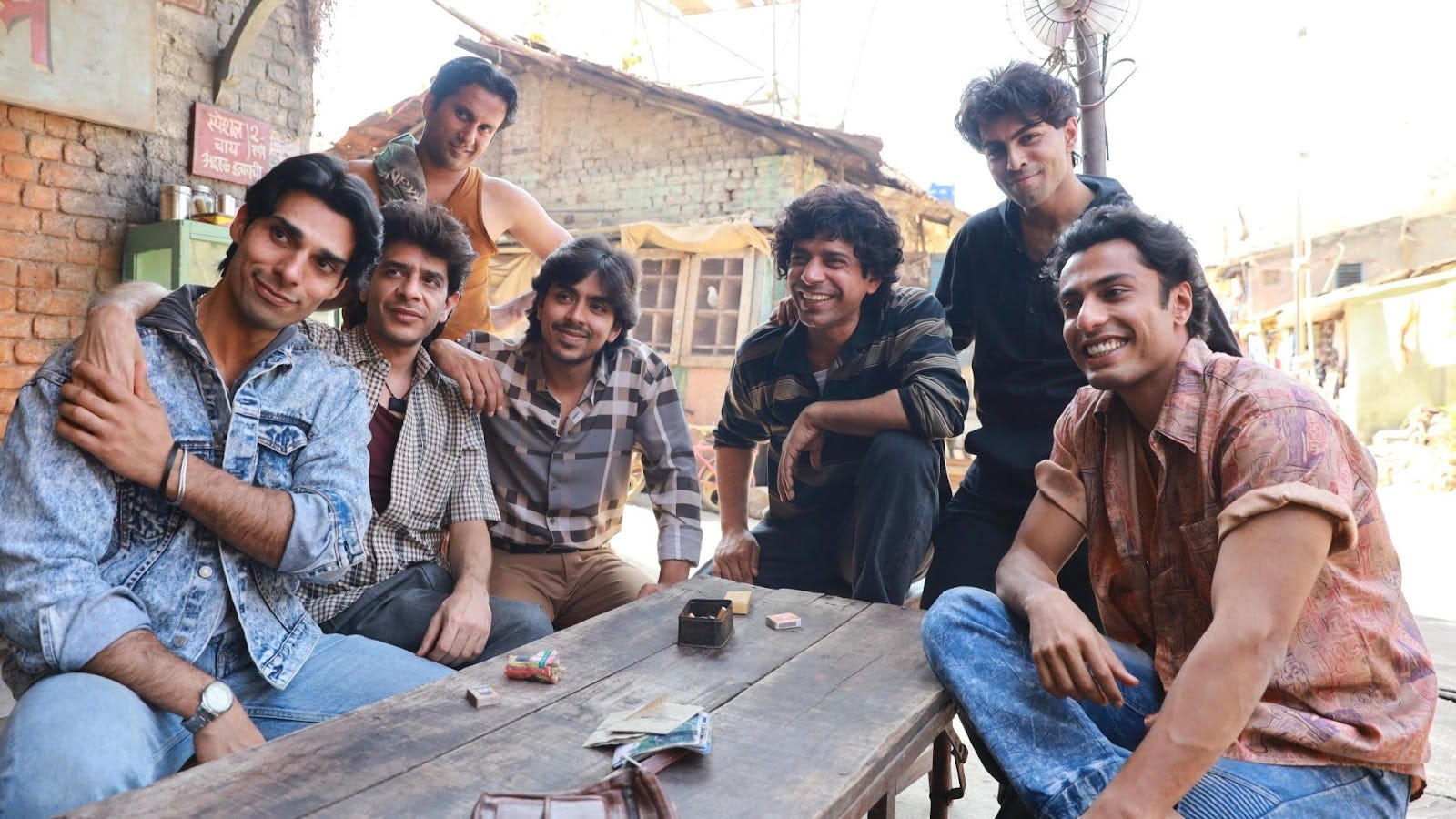
I was both weary and wary stepping in to watch both these productions: the former because that’s just how life is at the moment, and the latter because films based on-slash-inspired by reality are a bit dicey. As a viewer, I admittedly expect too much of them – they need to be accurate yet inventive, plainly truthful but narratively hatke, cognizant of the politics of the story and fair to the broader picture at once. The fact is that there is no film that is actually ever going to be a beat-for-beat retelling of an event. It’s not possible. What makes these films stand out is the unique perspectives they offer. In Reema Kagti’s Superboys of Malegaon [2024], the cinephilic aspirations of a group from small-town Maharashtra, already preserved through the documentary Supermen of Malegaon [Faiza Ahmed Khan, 2008], come to life as they stumble through the world of low-budget filmmaking. Tim Fehlbaum’s September 5 [2024] goes against type by not venturing close to the Palestine-Israel conflict despite the nerve centre of the narrative being ABC Sports’ coverage of the 1972 Munich Olympics attack in which eleven Israeli athletes were taken hostage and subsequently murdered by members of the Palestinian organisation Black September. Both films are about the telling of a story, feature-length BTS tapes, if one wishes to draw such a parallel.
And yet they are about more than just that.
Superboys allows a town long associated with one of India’s most flummoxing terror cases to shed that association — albeit partially — painting it in the hues of fandom before such a thing had become part of cultural shorthand. In Nasir Shaikh’s [Adarsh Gourav of The White Tiger fame – excellent as always] quest to lighten the lives of his fellow Malegaonkars, the film locates a joie de vivre in the mundane existence people have resigned their fates to. Kagti’s film shines a light on a cottage industry and recasts a town’s image, returning to it a dignity it has perhaps not enjoyed in seventeen years. To suggest Superboys is an exceptional film is an overstatement; it is something that is fundamentally more important in the current climate of clumsily portrayed Muslim characters, badly-made mid-budget Hindi films, and a forceful insertion of (poor) genre attributes into every script. What most of contemporary Bollywood gets wrong Friday upon Friday, Superboys wears with ease. The lines roll off its actors’ tongues flawlessly, the lensing [Swapnil S. Sonawane, partially responsible for Sacred Games and wholly so for Monica, O My Darling] is equal parts old-school romantic and rustically functional, and there is a sense of perpetual motion about the film, which spans over a decade. It has flaws, sure (I cannot get myself to like Shashank Arora [Titli, Made in Heaven] as an actor), but none that are unforgivable or egregious. Kagti deploys the fundamental tools of filmmaking such that Superboys is never about a single remarkable element; it's more like a good orchestra. She frames the film’s conflicts, which may feel like narrative contrivances in another’s hands, as the challenges of day-to-day life: the loss of a first love, the struggle to retain artistic skill in an industry focussed on commerce, the desire to be seen, these make Superboys a rarity among its kind: just as the men in the film wish to see their lives replicated or embellished on screen, the film itself becomes a vehicle to see celluloid characters based on real people as people rather than concepts or functions, both of which filmmakers would pick over a thoughtful characterisation of someone (looking at you, Meghna Gulzar!).
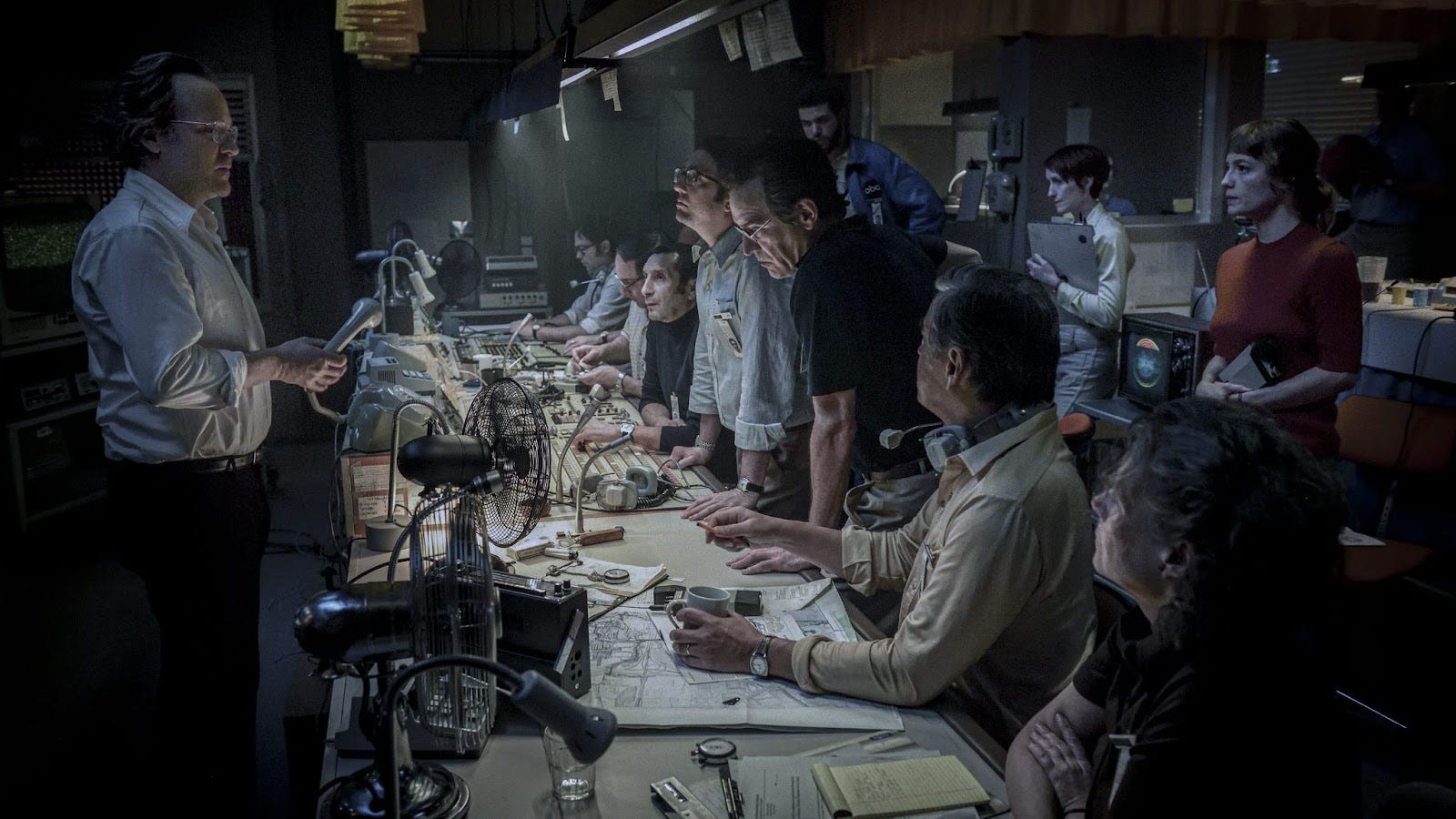
September is different because it stems from a totally different brand of cinema, one that is largely bereft of sentimentality and emotional hooks, reliant on distance rather than proximity. In the claustrophobic Munich control room of ABC Sports’, proximity is forced but this is not a united group of people. They each have their own agenda and their own view — one would rather run an unverified scoop to grab the eyeballs of millions of viewers whilst his direct subordinate would prefer to ascertain the rumour. To some, the Palestinians are terrorists but another advises against the casual tossing around of the word. The crew don't lose sight of the threat to human life in the course of their coverage, but their boss is negotiating with other networks so they can stay on the air. The German translator (a terrific Leonie Benesch – Babylon Berlin, The Teachers’ Lounge) is kept at an arm’s length – she’s a woman and the war is less than three decades in the past – but she is also the only person capable of speaking the local language and taking the broadcasters closer to the story as it unfolds.
Any viewer engaging in the exercise of watching Fehlbaum’s film knows the outcome of the situation: the hostages were murdered and the Israeli establishment unleashed Operation Wrath of God – a globe-trotting spree of assassinations fictionalised in Steven Spielberg’s Munich [2005] – upon those they held responsible. Live coverage of terror attacks is too commonplace to be remarkable in the twenty-first century, but it’s curious to see the same questions plaguing the broadcasters as wander into people’s minds even now: who does a live stream of the proceedings really help?
September works hard to shake off the distinction between dramatisation and documentary, often cutting to legendary sportscaster Jim McKay, who was in the studio that day and is depicted through archival inserts, the only character to not have an actor play him, likely because replacing McKay would be American sport’s equivalent to replacing Richie Benaud or Tony Greig. Fehlbaum seldom leaves the confines of the studio, shrinking the physical space his characters operate in as the world around them collapses inward. The understatedness of his cast is offset by the exceptional production design [Julian R. Wagner] and the claustrophobic cinematography [Markus Förderer], which keeps having to move from worn faces to screens to knobs and switches and panels. Fehlbaum’s most significant success, though, is making the crisis seem palpable once again: five decades after the attack, he is able to manipulate the audience such that they are on the edge of their seats despite their knowledge, and that’s because the film’s approach to the coverage, a sneak peek at the “pioneering” attempt of covering such an incident, is all that matters. What the studio mandarins see is what we see. What they know is what we know. What they fear, we do too. Fehlbaum works an angle to the larger Munich story and thus arrives at something which, while theoretically done time and time again, retains its punch.
5. Questioning the Personal: Films of Pushpa Rawat
SOURAJIT SAHA
It often happens that when one tries to write about one’s own self, it becomes the most difficult. Time and again, stories which have really stood out are the most personal. They hold a mirror to us.
Pushpa Rawat’s non-fiction films, Nirnay (2012) and Mod (2015), are such mirrors to her immediate surroundings. Hailing from Ghaziabad’s Pratap Vihar, she puts the lens on her immediate context, making films on her friends and family (Nirnay) and people in her area (Mod). She confided in me, ‘Pratap Vihar meri jaan hai’ (‘Pratap Vihar is my life’).
Mentored and somewhat instigated by veteran documentary filmmaker and educator, Anupama Srinivasan (Flickering Lights, 2023; Nocturnes, 2024), Rawat started filming her friends who, she says, talked a lot but weren't brave enough to take important decisions. Her honest probing questions led to an emotional, roller coaster ride of a film called Nirnay. The Hindi word “nirnay” translates to “decision”. All of the characters in the film are interviewed about marriage and career – two important events which are anchored on timely decisions. It begins with Rawat probing her brother and parents about their thoughts on Sunil ji’s proposal to marry her. The film grabs your attention with such a vulnerable topic of the filmmaker’s personal life and doesn’t let go till the credits roll. Such is the power and reliability of a non-fiction work of this calibre and originality. It is seldom seen, if ever at all, a woman from a small town approaching the parents of her lover to investigate the reason for not letting them marry each other. Let alone placing a camera at the parents, posing difficult questions. It feels incredulous to think that Rawat was shooting all this when she was just twenty-two years of age! Scene after scene, Nirnay throws deeply personal stories and confessions from Pushpa’s friends at you as you witness how a generation of women, mostly from Uttarakhand, talk about the absence of agency for women in most of their important life decisions. A few years into filmmaking, she even shoots her lover’s wife who confesses that she didn’t get much time to decide who she wanted as a partner. Her family started giving excuses that the costs for the wedding will keep on increasing if they delay. We all know someone (be it our mothers, sisters or aunts) who succumbed to these unfair impositions from their own kin. Hence it becomes more heartbreaking to see these helpless characters sharing their most private losses. Patriarchy operates almost in a similar fashion across all classes in this context of women’s agency in Indian marriages. The fact that patriarchy hasn’t loosened its grip even after a decade later is evinced by similar depictions in contemporary Indian films, Jeo Baby's The Great Indian Kitchen (2021), its Telugu remake of the same name (2023) and the Hindi remake Mrs (2024) being the much talked about additions on the list.
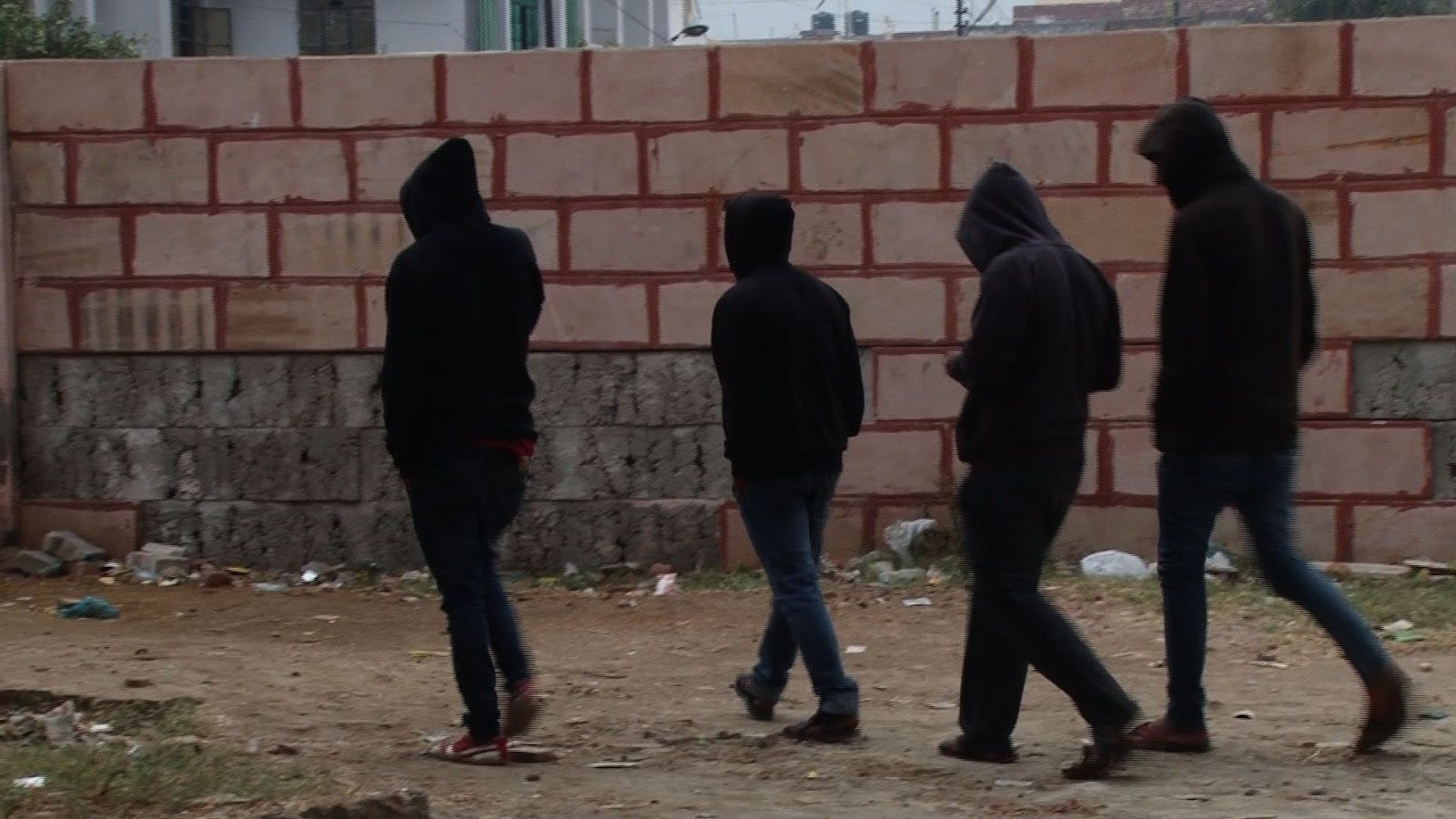
While Nirnay centres on mostly women, Mod is her attempt to understand adolescent boys who loiter around a water tank near Pushpa’s home in Pratap Vihar. Boys from in teens and twenties who are at a very crucial stage (mod, a juncture) in their lives resort to drugs, rap or just loitering around not being able to figure about their lives for months. One of the characters even says, ‘Abhi life spoil kar raha hoon, aur kya?’ (‘I’m wasting my life, what else?’). Mod emerges as a study of North Indian male adolescence plagued with purposelessness and addiction (social media, drugs and other kinds). Rawat admits that she tried to help these individuals to integrate back in their family or nudge them towards meaningful work. She even tried to support them by providing financial help but most of them wasted the opportunity away. This is a great example of how an artist’s intervention sees the best utilisation of financial support. The initial suspicion to the presence of a camera in their haven dies down as the empathy of the filmmaker wins over these outcast young adults. Rawat’s tenacious persuasion reveals how these boys came to be in that area centering the water tank. We see how they have built a community of sorts where they fool around and see life wither away. Their resignation from mainstream society makes you question the functioning of such, mostly exclusive entities. Mod reminds me of a visceral portrait of drug addicts in 60s America in a photobook named Tulsa by Larry Clark. Clark seems to have blurred the line between participatory and observatory. Rawat does the same with her films.
We don’t really introspect much about our surroundings in this age of constant content consumption. We are drowned by avalanches of information the moment we open our phones. Rawat asks us to observe the drama that life has to offer all around us. Try to understand the people close to us. Her films are a testimony on how you don’t require much taam-jhaam (preparation) to find those emotions which are always running under your skin – you just need to know where to tap.
6. A Crown With No Kingdom
RAGHAV PILLUTLA
BLEEDING CINEMA WITH A THOUSAND CUTS
Skipping the eloquent foreplay and highbrow snobbery that plagues the average enthusiastic cinephile, one might finally need to swallow a bitter pill: cinema, as we once knew it, is over. What started off as an evolved magic show with the films of the Lumière brothers, slowly became a respected artform and an indicator of human culture during a particular time in the history of our world, has shockingly reduced itself to a mere consumable that aims to provide instant gratification based on horrendously researched business analytics by machines. And on carefully analysing its downfall, it is clear that cinema, sadly, has had a rather gruesome demise.
One might ask a simple question – is Cinema really that essential to the human experience, when some have minimal access to basic amenities and grapple for life, whilst the fortunate few sit on their sofas engaging in intellectual discourse? By no means. But Cinema’s enriching contribution to human mindset, modus operandi and culture is undeniable, and surely this is enough to warrant for its survival. The most surprising aspect, is with regards to identifying the perpetrator of this crime against an integral facet of culture; plain and simple – it is all of us. From the condescending self-proclaimed cinema scholars to those just trying to gain momentary respite from their already difficult life, to some degree or another, we are all to blame.
THE UNNECESSARY BIFURCATION
Quentin Tarantino wisely claimed recently that 2019 was the last year of cinema – a statement that might stand the test of time if we continue to move in the current direction. The returns financially, intellectually, impact vis-a-vis engagement wise, have truly diminished, especially in the post-pandemic era. One might argue that the unnecessary, improvised bifurcation between movies that play in theatres and those that find distribution on streaming has turned out just fine, eliminating the need to expend reasonable amount of time, money and energy when one can enjoy sitting in the comfort of their couch. Understandable. But what they conveniently forget, is that going to the movies was not just an exercise in casual viewing - it was a memorable experience. Figuring out the logistics to go with loved ones as the weekend approached; the anticipation to watch a tale unfold with a community of like-minded people; people of all ages munching on popcorn as they tried to find themselves in what plays out on screen; post mortems on what one just saw: all of which within half a decade, feels falsely like over-romanticizing and nostalgia harbouring.
Makers and viewers alike, have bought into the ludicrous convention of evaluating whether a particular story must be told on a big or small screen. Apparently, only larger than life films made on exorbitant budgets get a theatrical window, whereas any other film is by default meant for the small screen. This theory might be reasonable from an economic standpoint, but time unfortunately has severed this thought right through the middle. Web series are meant to play on small screens, and rightfully so – engagement levels vary from person to person when a story is told over the course of several hours. When it comes to films however, budget must not be an overriding factor leading to decision. The expectation of required engagement from the viewer and the style of consumption, i.e., single sitting viewing, or pause-and- play viewing needs to be an influencing factor during the decision making process.
THE RELEASE WARS
For time immemorial, barring a handful of exceptions, cinema followed a crucial unwritten rule: studio backed high-concept tentpole films sustained the commerce of cinema, while independent gems appeared from absolutely nowhere to garner great public attention and ushered in much needed change. Fresh, emerging pools of talented actors and auteurs cropped up, eventually leading to studio opportunities; the virtuous cycle continued. This symbiotic relationship created an environment that for most, facilitated the raising of overall standards in terms of cinematic artform, as viewers got higher value for money and cherishable experiences. It is safe to say streaming started off with similar intentions, only to end up with established voices further cementing their space in uncharted territories at the cost of independent mavericks. More so when ‘projected theatrical blockbusters’ consistently fail to recover costs – after all, everyone needs to eat their bread and get by, and businessmen naturally, are more inclined to accommodate someone with a track record.
When ‘big films’ don’t fare well, mainly due to lacklustre creativity and
unoriginal narratives, distributors and exhibitors become highly apprehensive in handling risk, causing costs to skyrocket for producers and viewers alike, leading to a drop in footfalls and practices such as block-booking/ over reporting of receipts in order to create false demand at bulk scale. The worst of all – exciting and well-made indie gems made with high passion, shoestring budgets and scarce resources never get the opportunity of a theatrical (and now even streaming) release, leaving a massive dearth of formidable craftsmanship in times to come, ultimately leading to market saturation of veterans waiting to move on and mediocrely skilled individuals reinventing existing concepts, in turn ensuring total viewer dissatisfaction as the bar lowers by the day. It is key to note that most ‘indie successes’ in recent times are not ‘indie’ by any metric – especially financial.
THE MAKER PROBLEM
There is a prevailing misconception that viewers decide what kind of films are made and appreciated - a hypothesis that couldn’t be further from reality. For ages and until recently, going to the theatres was one of the few avenues of entertainment. Agreed, people can choose what they want to watch – but only what they want to watch within that which is available. Filmmakers and studio executives decide what is mainstream and what is not: for if at a given time, there are ten films that rely on the same tried and tested formulas, one is bound to go (should they choose to go at all) to the most star-studded, entertaining affair where narrative brilliance often takes a backseat, as if these elements are mutually exclusive. Narrative brilliance often comes from unabashed individuality and strong conviction, not by attempting to appease the obviously unknown tastes of an entire population. Sure, ever since the internet boom there is certain freedom when it comes to greater accessibility of cinema that was once hard to get a hold of, but most are not willing to go the extra mile to watch a specific film. Post streaming, said logic applies to theatrical releases as well.
Many a time, filmmakers accuse the viewer for having backward taste and attempt to justify making films that are unanimously regarded as mindless, when in fact, it is the makers themselves who choose to constantly put out risk- free and stale work. What ensues is a vicious cycle that soon one of the two parties will tire from. That said, filmmakers are not entirely to blame - the irony of the situation is that although filmmaking is a young person’s game requiring
the greatest amount of tenacity and endurance to do a good job of it, one needs a reservoir of life experiences to make well directed, astutely performed and compelling narratives. If one were to undertake the conventional route without any prior industry contacts, assistant directors if lucky, graduate to director status only in their late thirties or early forties. By then, priorities morph – putting food on the table and earning a stable buck to provide and sustain a household becomes far more important than artistic integrity and creative innovation, the success of which is perpetually equivocal.
The best scenario will be a group of young filmmakers who are given opportunities to create based on merit. But that reality is as far-fetched and naïve as trying to teach an old dog new tricks.
A NEW HOPE
As the great Billy Wilder sharply stated “individually, the audience is stupid. Collectively, the audience is a genius.” Sooner or later, people
appreciate and if not, recognize the power of anything well-made – and good is not as subjective as it appears. Filmmakers need to realise that what they do is not just a means of employment, but also an instrument for those who come after us to gain insight on the kind of lives we lived – our mindsets and practices, similar to how we view today the architecture and paintings of the past. The only way the vicious cycle will break, is if filmmakers realise their responsibility – especially the upcoming lot who have the privilege of acquiring strong taste in cinematic artform and strengthening basics through a wealth of references, simply due to ease of access. And now is the time, for even a few years back conventional mainstream tropes proved to be far more financially viable as compared to today.
Picks of the Month
A short list of the writers each choosing the best film/show they’ve watched in the preceding month (1st February onwards).
Prakhar: Vive L'amour (dir. Tsai Ming-liang, 1994)
Vanij: Variety (dir. Bette Gordon, 1983)
Varun: Deewaar (Yash Chopra, 1975)
Call for Guest Contributors
Cut, And Print! emerged from the shared enthusiasm of a bunch of young film critics interested extending their habit of “living and breathing” cinema to “writing and publishing” about it. While our core team contributes to the Newsletter regularly, we are always on the lookout for people to join our tribe.
If you’re interested in contributing you can -
If you liked this issue and would like to keep up with what goes on Cut, and Print!, click/tap the button below.
Thanks for reading Cut, and Print! Subscribe for free to receive new posts and support our work.